
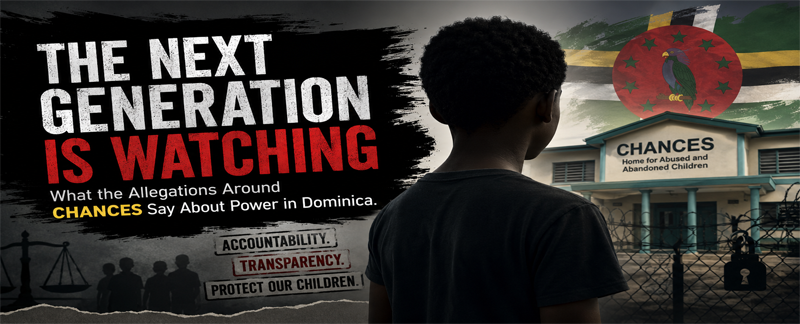
Politics is often spoken about as if it lives only inside Parliament, campaign rallies, or election speeches. But politics is not merely found behind microphones or inside government chambers. Politics reveals itself most clearly in how ordinary people are treated when they are vulnerable, powerless, and dependent on public institutions for help.
The allegations surrounding the treatment of Mr. Read and his 17-year-old son (Eexii Read raise precisely those uncomfortable questions.
According to Mr. Read and his son, what began as a housing crisis and repeated unanswered requests from Social Services requesting assistance in locating resources, programs, or any type of support available to them. Which ultimately escalated into the removal of the child from his father, placement at the government-funded facility known as CHANCES, and allegations of intimidation, humiliation, physical assaults with an object or weapon, and psychological distress are serious allegations. They deserve scrutiny, not dismissal.
For many Dominicans, politics has become a contest of personalities and party colours — red, blue, speeches, promises, accusations. Yet this story, if even partially accurate, forces a harder conversation: what happens when the system itself becomes the story? This is not merely about one family. This is about power itself.
A father reportedly informed Valda Powell and Social Services in advance that he and his son were going to be without a fixed residence.
Emails show repeated requests for the type of assistance in locating resources, programs, or any type of support available to them. According to the account, the calls for help went unanswered. Only after public attention emerged did officials appear to mobilize. That alone should concern people.
The uncomfortable reality is that housing instability, poverty, and family crisis should not become political liabilities to be managed or public relations problems to be contained. Government agencies exist precisely for these moments. And yet, according to these allegations, what followed was not support, but confrontation. Mr. Read and his son were no longer people in need of guidance, but a problem for the system.
The political implications cannot be ignored. For twenty-six years, the Labour administration led by Roosevelt Skerrit has overseen the institutions of the state. That includes the agencies, departments, and publicly funded facilities operating under government authority or support.
Whether government officials directly caused or approved any alleged misconduct is a matter requiring proper investigation and due process. But accountability does not disappear simply because responsibility is inconvenient.
Governments proudly fund and support institutions like CHANCES when those institutions are celebrated. They cannot distance themselves when serious questions arise regarding those same institutions. That is where this becomes political. Not partisan. Political. Because politics is ultimately about responsibility.
One must ask difficult questions that neither Roosevelt Skerrit, Thomson Fontaine, nor Joshua Francis can easily escape.
- Can any of them truly relate to a teenager allegedly crying alone inside a locked room?
- Can they relate to a child reportedly asking for legal counsel or a parent who feels scared and theatened?
- Can they relate to allegations of children being struck, demeaned, or referred to not by name but simply as “boy” and “White Nigger?”
- Can they relate to a father claiming he slept safetly outdoors while pleading through emails for someone in authority to care?
Perhaps they can. Perhaps they cannot. But they must answer to it.
Too often in Caribbean politics, suffering becomes filtered through party loyalty. If allegations reflect poorly on institutions, supporters rush to defend the system rather than examine whether the system failed. That instinct is dangerous.
No government — Labour, UWP, or any future administration should receive blind loyalty when children are involved. If these allegations are false, then the public deserves transparency and evidence disproving them.
If they are true, or even substantially true, then Dominica faces a far more troubling question: How could such treatment occur inside a facility funded to protect vulnerable andabused children? The Next Generation of Reform is no longer just watching. In this case, the Next Generation of Reform is already speaking.
Mr. Read’s son reportedly was questioned about his political interests and about hi political party during these events. Whether people agree with his father or not is beside the point. What matters is the lesson a young person may take from their interaction with public institutions.
When young people encounter systems they perceive as dismissive, coercive, or indifferent, they do not simply forget. They become reformers.
History shows this repeatedly. Reform movements are rarely born from comfort. They emerge from experiences that leave people believing institutions stopped listening. Perhaps that is why this story feels larger than one family dispute or one detention facility. Because this is not merely an allegation about CHANCES. It is an allegation about trust.
Trust in Social Services. Trust in authority. Trust in the promise that vulnerable and abused children will be treated with dignity. And if trust breaks, politics eventually changes.
Whether Dominica wishes to confront these allegations honestly or dismiss them defensively may determine what kind of political future awaits our island, and what kind of leaders the next generation chooses to become.
What may prove even more disturbing than the allegations of physical and psychological abuse are the reported questions surrounding politics and political beliefs.
If these allegations are accurate, Dominica faces a deeply uncomfortable question that extends far beyond the walls of CHANCES or the circumstances of one family.
Why would a vulnerable teenager — allegedly removed under the justification of being in need of protection, be questioned about politics at all?
That question matters.
A child placed into state custody is not entering a political arena. He is not entering a campaign office, a parliamentary debate, or a partisan forum. He is entering a system that carries a legal and moral obligation to protect his safety, dignity, and emotional well-being. Political beliefs, family political involvement, or reform-minded opinions are irrelevant to whether that child receives protection and humane treatment.
And yet, according to these allegations, that line had become blurred.
The young man at the centre of this story is not simply described as a child facing a crisis. He is described as a teenager who allegedly experienced multiple physical assaults involving objects and weapons, psychological intimidation, verbal humiliation, isolation, and questioning, touching upon political beliefs and reform. These are serious allegations that demand careful investigation.
The public deserves clarity. Because if politics entered that environment and the conversation, even indirectly, then this ceases to be merely a debate about child welfare procedures. It becomes a question about power.
What message does a young person receive if, during one of the most frightening moments of his life, he feels his identity, his family, or his political thinking becomes relevant to how he is treated?
The horror he described is not merely physical. Imagine, for a moment, the emotional reality alleged here.
A seventeen-year-old reportedly separated from his father. Removed from the only familiar support available to him during a housing crisis.
Placed into an unfamiliar environment. Allegedly crying, frightened, uncertain of what would happen next, and reportedly feeling unheard when asking for comfort, counsel, or family.
Whether every allegation is ultimately proven or not, the emotional weight of that experience alone cannot simply be dismissed as politics or public controversy. Fear leaves marks.
Young people do not experience these events as legal procedures or administrative decisions. They experience them as moments that shape how they view authority, trust, and justice.
And this is where the story becomes larger than one facility or one family dispute.
Because this was reportedly not a child hidden from authorities or abandoned without concern. According to the family’s account, the had given warnings as to what was to come. Requests for assistance had already been made. Social Services had allegedly been informed in advance about housing instability and appeals for support.
The public is therefore entitled to ask difficult questions about timing, decision-making, and why intervention allegedly appeared only after matters were picked up by outlets and contentious.
Those questions are not attacks on the government. They are the foundation of accountability. If a child is genuinely in immediate danger, then authorities must explain the danger and the actions taken to address it.
But if public criticism, institutional pressure, or administrative failures played any role in what followed, that too must be examined honestly. This is why explanations matter.
Social Services must explain their decisions. Officials involved, including Valda Poweel, should be allowed to explain what occurred, what concerns justified the actions taken, and how those actions aligned with the duty to protect a child rather than traumatize.
Not because anyone should be presumed guilty. But because public institutions do not maintain trust through silence. They maintain trust through transparency.
The public deserves answers. Children deserve protection. And Dominica deserves confidence that when the state intervenes in the life of a child, it does so solely for that child’s welfare, never for politics, convenience, or institutional self-preservation.
The Timeline
Monday – April 27, 2026
Mr. Read attended the office of Valda Powell to advise that he and his 17-year-old son would have to move out of their current residence on Friday, May 1, 2026. Mr. Read explained that his wife and the mother of his son, had failed to pay the rent for April at the residence where they had been living for the past year.
Mr. Read explained that Eexii mother had returned to Canada in early January under what he described as very questionable circumstances. He stated that his mother had essentially given him an ultimatum: either he returns to Canada or she would pursue a divorce. Mr. Read explained that he had no intention of returning to Canada and advised that, if she wished to proceed with a divorce that would be a decision for her to make after they had been separated for 1 year.
Mr. Read explained that he had no intention of returning to Canada, as he and his family had given up everything to start a new life in Dominica, and that was what he intended to continue doing. Mr. Read further explained that his son also did not wish to return to Canada, as he had enjoyed living in Dominica and had adapted well to life there.
Mr. Read continued to describe the events that led to his wife returning to Canada, including the actions of Jeffery Blaize, whom denied his son access to and education. Mr. Read explained that, when his son was finally permitted to attend school after 7 months, Dominica Grammar School than refused to cooperate or communicate with him in any meaningful way to help address the barriers that had been created throughout the previous year. Mr. Read stated that he believed these actions were intended to frustrate him into abandoning his efforts to enroll his son in the public school system.
Mr. Read further explained to Valda Powell that he was not seeking government financial assistance, but rather information regarding any available community programs, resources, or services that could assist them in overcoming the situation.
Valda Powell acknowledged that Mr. Read’s son was a minor and stated that he needed to be attending school. Outside of that, Mr. Read states that Valda Powell offered nothing further beyond verbal opinions that he and his son should simply return to Canada and provided no meaningful assistance, resources, or support. She then advised that she would no longer grant extensions on Mr. Read’s visa solely because he and his son would be without a fixed residence as of Friday.
Thursday – April 30, 2026
Mr. Read requested the April rent payment from his wife. She advised that she did not have the funds and attempted to have the landlord extend the rent deadline by an additional 16 days. The landlord declined and advised that they would be required to vacate the property.
Mr. Read then emailed Social Services, explaining the situation and requesting assistance in locating resources, programs, or any type of support available to them.
============================================
To: socialwelfare@dominica.gov.dm
Date: Apr 30, 2026, 11:20 AM
Subject: Seeking any available support services your office may be able to provide.
Dear Sir/Madam, I am writing to respectfully request assistance for myself and my 17-year-old son during a very difficult situation we are currently facing in Dominica.
We have recently experienced a sudden financial and housing crisis. My wife, who is a Dominican national, returned to Canada after nearly a year of us living together here in Dominica. While she has provided some financial support, it has recently become insufficient to cover our basic living expenses, including rent.
As a result, we have now been evicted from our accommodation, and unfortunately, the landlord has refused to allow us to remain even if we can provide full payment. This has left us without stable housing. We also have two dogs and a cat in our care, which we are trying to keep safe during this transition. At this time, we are seeking any available support services your office may be able to provide.
Additionally, I am actively seeking employment opportunities. I am a Canadian citizen currently residing in Dominica, and I am fully committed to building a stable life here. My son is a Dominican citizen, and we both have no intention or interest in returning to Canada, as we have made Dominica our home over the past year.
We are simply going through a difficult period and are requesting any help, direction, or resources that may assist us in becoming stable again and moving forward positively.
Thank you for taking the time to review our situation. We would be grateful for any assistance or guidance you may be able to provide.
Sincerely,
Kory Read
Friday – May 1-2, 2026
Mr. Read and his son became without a fixed residence. Mr. Read again contacted Social Services by email seeking some assistance.
============================================
To: socialwelfare@dominica.gov.dm
Date: May 2, 2026, 1:45 AM
Subject: Seeking any available support services your office may be able to provide.
Hello, I am following up with my request. We are sleeping in a park, and it is raining, if anyone cares. And my cell phone charge is shrinking because I have to send follow-up emails to a government agency that appears to ignore calls for help.
Sunday – May 3, 2026
Mr. Read and his son remained without a fixed residence, and Mr. Read again emailed Social Services for a 3rd time requesting assistance.
============================================
To: socialwelfare@dominica.gov.dm
Date: May 3, 2026, 5:17 PM
Subject: Seeking any available support services your office may be able to provide.
Dear Sir/Madam, I am writing for the third time to urgently request assistance regarding my 17-year-old son and our current situation.
We have not received any response to our previous emails. At this point, this is now our third consecutive night without a stable shelter, and we are currently sleeping on the street with our dogs and cat. This situation does not feel safe, and I am deeply concerned for my son’s well-being.
My son is a citizen of Dominica, and I am doing everything I can as his parent to protect and care for him under extremely difficult circumstances. I have reached out multiple times in good faith seeking help through the proper channels, but have not yet received any guidance or support.
I am respectfully requesting immediate assistance or direction to any available services that can help ensure my son’s safety and basic needs. If there is an office we should attend in person or a contact we should reach directly, please advise as soon as possible.
This situation is urgent, and I would greatly appreciate a prompt response.
Thank you for your attention
Kory Read
Monday – May 4, 2026
Mr. Read and his son remained without a fixed residence.
Tuesday – May 5, 2026
The situation involving Mr. Read and his son was reported on Facebook by Dominica Breaking News.
The Department of Social Services later acknowledged receipt of Mr. Read’s email and provided 2 contact telephone numbers for follow-up. However, at the time the response was sent, Mr. Read’s cellular phone had lost power and required recharging. As a result, he did not see the message until the following day, when he was able to recharge his phone and regain access to his emails.
Wednesday – May 6, 2026
That morning, when Mr. Read and his son returned to their previous community to swap out clothing and personal items that a friend had been storing for them, Mr. Read saw the email and immediately attempted to contact the provided numbers at approximately 8:30 a.m. However, neither number was functioning, nor he was unable to reach anyone for assistance.
Later that morning, Valda Powell called Mr. Read multiple times from her personal phone, frantically attempting to arrange a meeting. This occurred 9 days after Mr. Read had initially informed her that he and his 17-year-old son would be without housing that previous Friday.
Mr. Read and his son met with Valda Powell and 4 other women in Madrelle. The meeting lasted approximately 20 minutes. During the meeting, 4 of the 5 workers were, in Mr. Read’s opinion, hostile and judgmental regarding the family’s situation. Comments were made suggesting that Mr. Read cared more about the dogs than his son that he was a bad father because his son appeared tired, and that he should never have allowed the situation to occur.
Workers also communicated with each another in Patwa during the meeting while making facial expressions and gestures that Mr. Read interpreted as disrespectful and dismissive.
Despite the workers apparent disapproval of Mr. Read, all individuals present concluded the meeting by confirming that they had no concerns regarding the safety or well-being of Mr. Read’s son and permitted his son to remain in his father’s care. It was acknowledged that his son was being properly cared for, adequately fed, sheltered from the elements, and showed absolutely no signs of distress.
The workers also observed the animals belonging to Mr. Read and his son and advised that they were satisfied with their condition.
Mr. Read explained that they had access to money and food and were effectively camping throughout the island. He advised that they had experience camping in Canada and that he personally had experienced homelessness in the past, and therefore, the situation, while difficult, was manageable.
Mr. Read further explained that his wife had deliberately withheld rent payments for April in an effort to create the very situation they were in, as she had been attempting to force the return of their son to Canada while leaving Mr. Read in Dominica without support.
Mr. Read advised that members of their community were aware of their circumstances and had been assisting them by providing meals, allowing them to store belongings, offering bathing, and shelter if weather conditions became severe.
The workers spoke directly with the child and asked questions regarding whether he was safe, hungry, or in need of assistance. Following those discussions, the workers again permitted Mr. Read’s son to remain with Mr. Read camping overnight.
The workers requested that Mr. Read attend their office in Roseau at 9:00 a.m. the following day. Mr. Read asked whether they could accommodate the situation by using a vehicle to pick him up and bring him to the office, rather than requiring him to walk approximately 45 minutes each way in the sun while leaving his son alone with the dogs for an extended period of time.
The worker responded that it was not their responsibility to assist Mr. Read in attending the meeting and advised that they would not accommodate his request.
Mr. Read further explained that it would have be significantly easier for the Director or staff to accommodate the circumstances by travelling approximately 5 minutes by vehicle to his location, rather than again requiring him to walk approximately 45 minutes each way in the sun while leaving his son alone with the dogs for an extended period of time.
The workers appeared displeased with Mr. Read’s response and stated that they would see him the following day.
Mr. Read responded again by explaining that he had not caused the situation and that his wife’s actions had created the circumstances they were facing.
When the workers departed, no contact information or emergency support numbers were provided to Mr. Read. The workers left the location without providing any additional guidance or assistance.
Thursday – May 7, 2026
The following morning, Mr. Read did not attend the scheduled meeting, as previously explained. At approximately 10:30 a.m., Valda Powell texted Mr. Read, and he again explained that he was unwilling to walk 45 minutes each way in the sun, leaving his son alone with the 2 dogs, only to be insulted and judged again. Mr. Read advised that he remained very open to meet with the Director if staff were willing to accommodate the circumstances by travelling the short distance to their location.
After a brief text exchange, Valda Powell advised that the staff would come to their location. However, instead of the Director attending, the same worker from the previous day arrived. According to Mr. Read, this worker had previously been hostile, judgmental, and had spoken in Patwa about him in his presence.
The worker’s first comment questioned why only Mr. Read had failed to attend the meeting. Mr. Read again explained that he was unwilling to walk 45 minutes each way in the sun, leaving his son alone with 2 dogs, merely to be insulted and judged again. He stated that the Director could just as easily have accommodated the circumstances by travelling with her to attend the same meeting at his location, but chose not to, instead attempting to inconvenience him and his son unnecessarily.
The discussion then shifted toward concerns and disagreements regarding the conduct and effectiveness of Social Services, including their behavior the previous day, as well as broader concerns about the failures of the Labour administration over the past 26 years.
According to Mr. Read, at no point during the discussion did the worker or Valda Powell ask about his son’s well-being. Instead, the conversation focused on disagreements regarding government services and the conduct of staff during the previous meeting.
After approximately 15 minutes, Mr. Read questioned the worker regarding comments she had made in Patwa about him to a co-worker the previous day. Although Mr. Read did not understand what was being said, he believed the comments were directed at him based on the worker’s behavior and the timing of the conversation, which occurred immediately after he gave a response with which they appeared to disagree. The worker denied making such comments. At that point, Mr. Read ended the conversation and walked away to return to his son. Valda Powell repeatedly called out for Mr. Read to return, but he continued walking home to his son.
Approximately 10 minutes later, while walking back to his son, a minivan pulled up from behind Mr. Read and abruptly slammed on its brakes directly in front of him, blocking his path. An officer dressed entirely in black exited the vehicle from the left side, came around the rear of the vehicle with his firearm drawn, and pointed it directly at Mr. Read’s head while instructing him not to move asshole.
Mr. Read advised the officer that he was holding only a water bottle and his phone and stated that, in his view, the level of force being used was excessive and appeared intended to intimidate him rather than address any genuine threat. The officer then approached, visually confirmed what he was holding, holstered his firearm, and firmly pulled Mr. Read by his collar towards the rear of the vehicle.
When they reached the left side of the vehicle, a female officer took Mr. Read’s water bottle and phone. The driver then instructed another officer, described as a tall male wearing green military-style fatigues, to place handcuffs on Mr. Read. The officer appeared confused and sought clarification, and the driver repeated the instruction to handcuff Mr. Read.
The officer then placed the handcuffs on Mr. Read, while Mr. Read fully cooperated throughout the interaction.
While inside the vehicle, the officer who had handcuffed Mr. Read asked where his son was located. Mr. Read advised that he could take them directly to him and explained where he was staying.
During the drive, Mr. Read asked why he was being detained. The officer advised that Social Services and Valda Powell had stated that Mr. Read had refused to allow them access to his son and that they now feared for the child’s well-being and intended to apprehend him. Mr. Read advised the officer that no such conversation had ever occurred.
When they arrived at the location where they had been staying for the day, namely their former residence, where they had been permitted to remain on the front porch for shelter from the sun and rain. Mr. Read, the worker, Valda Powell, and 4 police officers walked up the stairs together. At that point, the worker and Valda Powell instructed Mr. Read’s son to gather his belongings and advised him that he would be leaving with them.
They then requested Mr. Read’s son’s Dominica and Canada passports, as well as Mr. Read’s Canada passport. Mr. Read provided his son’s Dominica passport and his own Canada passport, but did not provide his son’s Canada passport.
After several minutes, as the individuals were preparing to leave, Mr. Read requested the return of his Canadian passport. Valda Powell initially refused to return it. Mr. Read explained that he required valid identification in the event he was stopped by police, in order to demonstrate that he was legally present in the country on a visa, and also because he needed identification to access funds through MoneyGram.
Following a discussion with the police officers and the worker present, Valda Powell returned Mr. Read’s passport and then departed with his son. At that time, Mr. Read states that he was not provided with any information regarding why his son was being taken, what authority or process was being relied upon, where his son was being taken, or who he could contact to obtain answers or further information regarding the situation. He was left without guidance, documentation, or any clear explanation as to what steps, if any, were available to him moving forward.
When they reached the bottom of the stairs, the officers proceeded to ask Mr. Read’s son whether he had a phone. He responded that he wished to speak with a lawyer or have his father present. The officers then instructed him to raise his hands in the air and proceeded to conduct a pat-down search, removing the contents of his pockets.
During the search, his retainers were removed and thrown onto the ground, where they were subsequently broken after being stepped on. His phone was also thrown onto the ground, although it was later retrieved and placed in the vehicle after he had been seated inside. Mr. Read’s son believes that his phone may have been damaged, as he managed to briefly observe it while getting into the vehicle and noticed what appeared to be damage.
During the drive, Mr. Read’s son states that no one asked him any investigative or welfare-related questions. Instead, he was repeatedly insulted with comments that his father had made the situation unnecessarily complicated and that Mr. Read was a bad father for failing to properly care for him.
Mr. Read’s son further stated that the tall military officer who had earlier handcuffed Mr. Read began speaking about a prior altercation involving another individual who had attempted to take his firearm, and claimed that he had ultimately shot that individual.
According to the son, the officer made these comments while looking directly at him throughout the conversation, which caused the son to perceive the remarks as intimidating and intended to instill fear.
The vehicle then travelled to the Coast Guard station in Fond Cole, where they stopped and remained parked for a period of time without exiting the vehicle. The worker, seated behind Mr. Read’s son, was on the phone and subsequently instructed the driver to turn around and proceed to Police Headquarters in Roseau.
Upon arrival at Police Headquarters, Mr. Read’s son exited the vehicle and sat on a bench nearby. Valda Powell entered the building and spoke with an older gentleman dressed in a military uniform while standing in the doorway.
While seated outside, the worker came over, sat next to Mr. Read’s son and continued to harass him by making more negative comments about Mr. Read, telling the son that his father was a bad parent and stating that she was happy to have apprehended him from his father. She further stated that his father was not in Canada and that Dominican law was on her side.
Mr. Read’s son was then escorted into the building and up a flight of stairs to what appeared to be a call centre area containing six desks and 4 workers. He remained seated on a bench at the back of the room for approximately 2 hours. Valda Powell explained that they were waiting to arrange transportation.
While waiting, a gentleman with 1 leg and no crutches was brought into the room and seated beside him on the bench. According to Mr. Read’s son, the gentleman eventually lay down on the bench, at which point an officer instructed Mr. Read’s son to stand up and then flipped the bench over while the gentleman was still lying on it, causing the man to fall to the floor and strike his head.
Mr. Read’s son further states that the officer then laughed and instructed the gentleman to hop up and sit properly. Later, another female officer told the gentleman to hop along, hurry up, while another officer remarked that he hops like a rabbit, as they yelled at him while he attempted to navigate the stairs down without crutches.
After approximately another hour, Valda Powell moved Mr. Read’s son to a second building and instructed him to sit behind a counter area where police officials were working. He remained there for approximately 1additional hour.
At one point, a male officer asked Mr. Read’s son for his name. The son responded that he wanted a lawyer or his father present. According to the son, the officer repeatedly asked the same question, becoming increasingly hostile and intimidating each time. The son states that he consistently repeated that he wished to speak with a lawyer or have his father present.
Mr. Read’s son further alleges that the male officer then began poking him in the shoulder while demanding answers. When that failed to produce a response, the officer escalated to physically nudging him, which the son describes as soft punches to the shoulder.
The officer then complained to a female coworker, stating words to the effect of, this boy is rude, doesn’t he know I’m a police officer and has to answer me? The female officer responded by suggesting that the boy was probably mute.
According to Mr. Read’s son, the officers then began speaking in Patwa while looking at him and laughing. Although he did not understand what was being said, he recalls hearing references to Canada and believing the comments were being made about him mockingly and disrespectfully.
According to Mr. Read’s son, there was eventually a sudden increase in activity within the room, which became filled with approximately 10 or more military personnel. He states that many of them were looking directly at him while speaking among themselves. From time to time, individuals would approach him and ask for his name and question why he was there, but he chose not to respond.
Valda Powell later returned and exited the building with him, the worker and a male driver, entering another vehicle. During the drive, the worker and Valda Powell continued to harass Mr. Read’s son by making more negative comments about Mr. Read, stating that he was a bad father and that they were glad to have removed him from his care.
They eventually arrived at a youth detention-type facility for abandoned children known as CHANCES. According to Mr. Read’s son, he had still not been informed why he was being taken there or why he had been removed from his father’s care.
They went inside and entered a room that appeared to be an administrative office, where Valda Powell and the worker introduced Mr. Read’s son to the administrator of the facility. The administrator then began explaining the facility’s rules, including that residents were required to complete chores and that electronic devices would not be permitted except on Fridays and over the weekend.
The administrator also advised that if Mr. Read’s son had allergies, he was expected to disclose them, and stated that if he failed to do so, Boy, that is not our problem. When asked whether Mr. Read’s son had any allergies, he advised that he did and explained that the medicine he required was with his father. According to Mr. Read’s son, the conversation ended there, and no further follow-up occurred regarding his medical needs.
The worker then provided Mr. Read’s son’s phone to the administrator. The administrator subsequently escorted him to a living area and showed him the room where he would be sleeping. She asked whether he had clothes, deodorant, shampoo, soap, toothpaste, and a toothbrush. Mr. Read’s son states that he did not respond. Staff then provided him with a mattress, bedsheets, clothing and hygiene products.
At one point, Mr. Read’s son obtained a glass of water, which appeared dirty. He asked a staff member wearing a blue shirt whether there was any clean drinking water available. According to Mr. Read’s son, the worker responded by arguing with him and insisting that the water was fine.
Mr. Read’s son further states that the worker then assaulted him by striking him on his left calf with a short wooden broom handle stick about 12-14 inches long, 3 times.
Mr. Read’s son states that he angrily questioned what was happening and protested the treatment, asking why he was being hit. He was told that there were strict rules in the facility, including that speaking back to staff or failing to comply with instructions would result in physical punishment, with escalating consequences for delayed or incomplete chores.
The staff member in a red shirt than appeared, and Mr. Read’s son again asked her for clean drinking water. He was then instructed by this staff member to go to his room. When he did not immediately comply, she then assaulted him by striking him with a wooden paddle-like object measuring approximately 10 to 12 inches long and 4 to 6 inches wide, with a wooden handle on one side, which he described as resembling the shape of a meat cleaver, while calling him Boy and speaking in Patwa.
The staff member in red physically forced Mr. Read’s son toward his room by grabbing the left side of his head, by the hair, and pushing him forward while striking him repeatedly along the way, still calling him “boy” and yelling in Patwa. Mr. Read’s son reports that he was then pushed into his room; the door was closed, and locked from the outside.
Later that evening, at 7:00 p.m., the staff member dressed in red unlocked Mr. Read’s son door, referred to him as boy, and instructed him that it was time to eat. He states that he was provided with a small single piece of mastiff bread with peanut butter and a cup of tea.
After eating, Mr. Read’s son was instructed to wash dishes. He refused, stating that he believed he should not be in the facility and that he had not been given any explanation for his placement. The staff member in blue then got up, and again assaulted him by striking him 3 times with a short wooden broom handle, after which he left the dishes on the table and ran to his room, where he remained distressed and crying.
After a while, Mr. Read’s son came back into the living room, where the staff members in red and blue continued to yell at him regarding the dishes.
He states that the children were later instructed to shower, as each room had its own shower. He did not shower that night and instead remained in the living room.
At approximately 11:00 p.m., Mr. Read’s son, Joseph, and a young female resident were instructed to go to bed as the workers indicated they were going to bed. He complied and went to his room. After they entered their door was locked from the outside.
Mr. Read’s son states that he was unable to sleep due to roaches in the bed and in the room, a hard mattress, and extreme heat caused by a non-functioning fan. He remained awake throughout the night, quietly crying and asking God for help and for his father to be brought to him.
Later that evening, 3 police officers arrived by Mr. Read and demanded that he surrender his son’s Canada passport. Mr. Read refused. He states that the officers then searched through their bags, attempting to locate the passport. Mr. Read explained that the passport was not in his possession and had been hidden outside of his immediate vicinity.
Mr. Read states that one of the officers threatened him with arrest and advised that they had ways of finding out where the passport was located. Mr. Read responded by asking, what are you going to do, beat me? He states that the officer conducting the questioning laughed and repeated Mr. Read’s statement back to him.
During this time, a large number of the members of the community gathered in the area and began questioning the officers regarding the removal of Mr. Read’s son. Multiple individuals reportedly told the officers to leave him alone, stating that the actions being taken were unjustified and that Mr. Read was not required to surrender his son’s Canadian passport without legal authority. Community members further questioned whether the authorities had obtained any court order authorizing the removal of his son and expressed concern that they were trying to deporting his son, whom they identified as a Dominican citizen, against his will.
Mr. Read states that after approximately 20 minutes, the officers left the area and did not return.
Friday – May 8, 2026
The following morning at approximately 5:00 a.m., staff unlocked the children’s room doors and instructed the children to get ready for school. When the children were done, they sat in the living area waiting for breakfast to be prepared by the chef.
The staff member with her hair up in a bun called for a child to get out of bed; there was no response. After approximately 5–10 minutes, the same staff member made the request again, with no response. Approximately 3-5 minutes later, a staff member with a bonnet on her head walked towards the bedroom hallway holding a belt in her right hand.
Mr. Read’s son states that he got up and moved toward the kitchen hallway and observed the staff member proceed down the hallway toward rooms on the left side. He then heard a young girl scream from inside one of the rooms, followed by shouting from the staff member.
He states that shortly after, a young Asian girl appeared, being held by the arm and was being assaulted with a belt while being brought towards the living room. Once they reached the doorway of the living room, the Asian girl was released and ran to the couch, where she attempted to hide behind the cushions. Mr. Read’s son states that he then approached and sat beside her to comfort her.
Breakfast was later prepared by the chef at approximately 6:00 a.m. The meal consisted of a sandwich (spam and bread with sauce and onions) and tea. Mr. Read’s son states that he placed his dish in the sink and was told politely by the chef that she would wash it for him.
Mr. Read’s son states that for a period of time afterward, he moved around the building observing the environment and attempting to determine how to leave. Afterwards Mr. Read’s son returned to the living room area and sat on the couch and was just thinking about the situation.
Mr. Read’s son states that while seated on the couch, he observed that the teenage girl in a wheelchair became increasingly upset and began making loud noises and screaming. He states that shortly after this began, a baby in a crib within the same room also became distressed and started crying loudly.
Mr. Read’s son states that the staff member in a red shirt came out from the kitchen hallway and approached the child in the wheelchair first. She told the child to be quiet, while placing her hand over the child’s mouth. Mr. Read’s son states that when the child reacted further, the staff member in red assaulted/slapped the child on the left side of her head with her hand.
At that point, the staff member in a red shirt approached the crib where the baby, approximately 7–9 months old, was crying. Mr. Read’s son states that she reached into the crib and assaulted the baby by slapping him her hand while telling the child to be quiet.
Mr. Read’s son states he could not see the exact point of contact because the staff member’s body was blocking his view, but he observed the motion of her right arm and heard the baby cry more loudly afterward.
The staff member in the red shirt then turned and walked back toward the kitchen hallway and did not interact further with the children while they continued crying. Mr. Read’s son states that he immediately returned to his room after this occurred as he was very distressed and upset by what he had just witnessed and began crying. He states that he felt overwhelmed and shaken by the incident.
Mr. Read’s son states that he later he came out of his room and asked about his phone and was told he was not permitted to have it, as police had instructed that he not be given access to it in order to prevent contact with his father. When he asked for a legal reason for the phone being withheld, the administrator stated she did not know and made a phone call from the administrative office.
The administrator placed the call on speaker and asked Mr. Read’s son to repeat his question. Mr. Read’s son states that the person on the phone did not respond, and the administrator just ended the call. He further states that the administrator then requested that his photograph be taken for a file. He advised that he did not consent to being photographed and walked away.
He then sat on a couch in the living room and eventually fell asleep. Mr. Read’s son states that the staff member in red later approached him and assaulted him by striking him on the head while sleeping, demanding that he sweep and mop all the bedrooms. He refused, stating that he did not believe he should be in the facility and did not understand why he was still being held there.
Mr. Read’s son reports that the staff member became verbally aggressive, so he began walking towards his room. At that time, the staff member in blue was passing by, and the staff member in red instructed her to grab him. Mr. Read’s son states that the staff member in blue grabbed him from behind, around the neck and upper body area while stating that she has had enough of this white nigger, as he attempted to pull away, because he was having difficulty breathing because she trying to choke him.
Mr. Read’s son further states that the staff member in red then assaulted him by striking him on his back and left side with the wooden paddle-like object while he was being restrained. He reports that she also referred to him as boy during the incident, while she was yelling in Patwa.
The staff member in blue then released him, again assaulted him by grabbing him by the top of his hair, and dragged him toward his room. Mr. Read’s son states he did not resist further and was pushed into the room, after which the door was closed and locked from the outside.
While Mr. Read’s son was locked in his room, he states that 5 women entered at different times and repeatedly questioned and interrogated him about his father and his circumstances.
Mr. Read’s son describes the tone of the questioning as at times hostile and intimidating in nature. He states that during these interactions, he repeatedly advised that he did not want to talk and wanted a lawyer or his father present before answering any questions. Mr. Read’s son reports that despite this request, the questioning and comments about his father continued, and he was never provided with access to legal counsel or family contact at that time.
Mr. Read’s son states that the 5 female individuals repeatedly asked him the same questions over and over again. He reports that he felt the questioning was persistent and designed to wear him down and pressure him into agreeing to return to Canada. He further states that he felt increasingly overwhelmed by the repeated questioning and the overall circumstances, to the point that he felt he was being mentally pressured to give in.
- What was on his father’s resume and what type of work he did?
- That his father cared more about the dogs than him.
- That his father had abandoned him in Dominica.
- Requests for his phone password.
- Why he was not cooperating?
- Statements that his father had returned to Canada and left him behind.
- Whether he was willing to return to Canada?
- Whether he had family in Canada?
- Where his mother was?
- Statements that his father would be killed if he did not return to Canada with him.
- Statements that if he did not return to Canada, they [the government] would kill his pets.
- Statements that he would never leave the facility and that it was his “new home” and “family.”
- Questions about his schooling, education, and political interests, including:
- What is the name of your political party?
- Do you know who Roosevelt Skerrit is?
- Why do you want to lead a political party?
- Statements suggesting alleged racism back home and comments telling him to harm himself which were later described as “just jokes.”
- Numerous comments that his father is a “bad father.”
- Statements that only educated people could enter politics and that he should return to Canada to complete his education.
- Questions regarding his Canadian passport.
- Statements that he was going home on Sunday (May 10, 2026) because his mother was
buying a ticket for him to fly out of Antigua, where she had family.
Mr. Read’s son states that each time a female individual left the room after questioning and interrogating him, they locked the door behind them.
Note: Mr. Read states that he later spoke with the child’s mother and their daughter. According to those conversations, it was his understanding that the worker planned to have Mr. Read’s son removed and returned to Canada to his mother against the child’s stated wishes before Monday, thereby avoiding the need to appear before a justice to justify the apprehension of the child from his current guardian and primary caregiver, Mr. Read, before a justice. Mr. Read further states that it was his understanding that, following the removal of his son, authorities would then attempt to deport him from Dominica shortly thereafter.
Mr. Read’s son further states that later in the day, when the children returned from school, the door was unlocked. He was still not permitted to leave his room and was instructed to go back inside when he attempted to do so.
At approximately 7:00 p.m., he was told by the staff member in a red shirt, Boy come and eat and was provided a small single mastiff bread with peanut butter and tea.
Mr. Read’s son states that afterwards he went to the other side of the building and sat on a couch at the end of a hallway near a large window. He reports that he began crying due to feeling overwhelmed and scared by the treatment of himself and other children.
A staff member wearing a shirt displaying a child-themed cartoon design walked over to him and stated that he would eventually get used to the rules, that the facility was now his new home and family, and that in time; everything would get easier and better.
At approximately 8:00 p.m., he again requested his phone and was told that he could not have it, as staff stated they had been instructed by the police not to provide it to him. He then went to his room, retrieved and put on a shirt, collected his toothbrush and toothpaste, and proceeded towards the front door in an attempt to leave the building.
Mr. Read’s son states that a staff member with a child cartoon design shirt attempted to follow him to stop him from leaving. As he exited, a person on the balcony stated, You did not have the courage to do it. Mr. Read’s son then walked through the gate, began running, and eventually made his way back home on foot to Madrelle, 14 km away.
Mr. Read’s son states that facility staff repeatedly referred to him only as boy throughout his time in the facility, while consistently addressing the other children by their proper names, causing him to feel singled out, degraded, and dehumanized.
At approximately 11:30 p.m., Mr. Read’s son returned to his father’s location. Mr. Read states that his son came running up the street in visible distress, screaming, crying, and calling out for his father. Mr. Read approached his son, embraced him, and reassured him that he was safe, that he was back home, and that he they would not get the chance to take him gain. Mr. Read further states that a number of community members gathered at the scene and assisted in reassuring his son that he would not be taken again.
After approximately 30 minutes, once his son had somewhat calmed down, Mr. Read sat with him and asked him to explain what had occurred at the detention centre. Mr. Read recorded portions of the conversation. He states that his son remained emotionally distressed throughout the discussion and struggled while attempting to describe the events.
Mr. Read’s son alleged that staff members had assaulted him with wooden objects, choked him, and pulled him by his hair. He further alleged that staff repeatedly attempted to convince him that his father had abandoned him and that only his mother wanted him to return to Canada.
Mr. Read states that he then examined his son’s back and calves and observed marks and bruising, which his son alleged were caused by repeated assaults while in the care and custody of the Government of Dominica facility.
Mr. Read states that he took a brief video recording of the visible marks and injuries. Fearing that his son would be located and returned to the facility, he arranged for his son to stay at a separate, undisclosed location where he would be safe from being placed back into harm’s way.
Mr. Read further states that he instructed his son to write down everything he could remember about what he had seen, heard, and experienced at the detention centre, despite his emotional condition. He advised his son that he would return the following day to check on him.
Saturday – May 9, 2026
Mr. Read met with his son again in the early afternoon. During that meeting, his son provided him with 3 handwritten pages describing what he states he saw, heard, and experienced during the period he was held at the detention centre.
Mr. Read states that his son apologized and explained that additional events had occurred, but that he became emotionally exhausted from continuing to write about and relive the experience. According to Mr. Read, his son stated that he just wanted to forget about it.
Monday – May 11, 2026
Valda Powell contacted Mr. Read by telephone and advised him that if he was in the presence of his son, or had knowledge of his whereabouts and failed to disclose that information, he would be charged and his son would be returned to the detention facility.
Mr. Read responded that he would not disclose his son’s location because, according to his son’s allegations, he had been repeatedly assaulted while in the care and custody of the facility. Mr. Read states that Valda Powell immediately denied the allegations and stated that nothing happened to his son.
Mr. Read advised her that, in his view, the fact that her first response was to deny the allegations rather than inquire about the child’s condition or well-being demonstrated that her priority was not the best interests or safety of his son, but rather protecting herself and her professional position.
Mr. Read further explained that he possessed photographs and video recordings documenting the visible injuries. He states that Valda Powell again accused him of lying and denied that any abuse or assaults had occurred.
Mr. Read further notes that no one from the detention facility, the police, the assigned worker, or Valda Powell contacted him to advise that his son had allegedly fled from the facility, that they did not know his whereabouts, or that they were concerned for his safety or well-being. He states that the entire weekend passed without any notification being provided to him, his family, or even the child’s mother regarding the child’s location or condition.
Mr. Read further states that neither the police, the worker, nor Valda Powell looked for his son throughout the weekend, despite previously asserting that they were deeply concerned for the child’s welfare and alleging that Mr. Read himself was the reason for the original apprehension. Mr. Read states that, despite these serious allegations and the apprehension of his son, the grounds for the apprehension have still never been properly explained or justified to him.
Mr. Read then advised Valda Powell that he would be returning to the residence from which his son had originally been apprehended and stated that she could attend there and have him arrested for refusing to disclose his son’s location if she wished to do so. Mr. Read states that he then ended the call and waited at the residence for approximately 4 hours for Valda Powell and the police to attend, but no one arrived.
Later that day, Mr. Read states that he contacted the Canadian High Commission to report what had allegedly occurred and to seek assistance regarding the situation.
Mr. Read states that, following his contact with the Canadian High Commission, representatives of the High Commission communicated directly with Valda Powell regarding the situation involving his son. According to Mr. Read, shortly after that intervention, Valda Powell agreed that neither Mr. Read nor his son would be pursued further and advised that Mr. Read would no longer be considered a threat to his son, despite previously being portrayed as the justification for the child’s apprehension and detention.
Mr. Read further states that it was communicated that his son was no longer considered to be at risk of harm or in need of protection, provided that Mr. Read and his son agreed to leave Dominica as soon as possible. Mr. Read alleges that this sudden reversal raised serious concerns for him, as the same authorities who had previously claimed his son required immediate apprehension and confinement now appeared willing to close the matter entirely on the condition that they leave the island.
Mr. Read states that he has repeatedly contacted the Canadian High Commission seeking assistance in recovering his son’s cellular phone, which he alleges remains in the possession of the detention facility for abandoned children and/or under the control of Valda Powell. He states that, despite multiple requests, the phone has not been returned to his son, while still being forced for cell phone service.
Since these events, Mr. Read states that his son has continued to experience significant emotional distress. According to Mr. Read, his son frequently wakes throughout the night in a sweat, frightened and scared, and appears to repeatedly relive the approximately day-and-a-half period he spent at the detention facility through recurring nightmares and intrusive memories.
Mr. Read further states that his son will, at times, suddenly become quiet and emotionally withdrawn during the day and has broken down sobbing out of fear that he may be forced to return to the facility. In Mr. Read’s personal opinion, his son requires professional counselling or psychological support to help cope with the trauma he alleges was caused by the events he experienced while detained.
Mr. Read further notes that, although his son may hold Dominican citizenship, he was born and raised in Canada. Mr. Read states that the type of physical and psychological treatment his son described experiencing is not something accepted, normalized, or practiced within his family or within Canadian child welfare standards and expectations. Mr. Read believes that the impact of these events on his son was particularly severe due to his upbringing and lack of prior exposure to what Mr. Read describes as cruel and degrading treatment.