
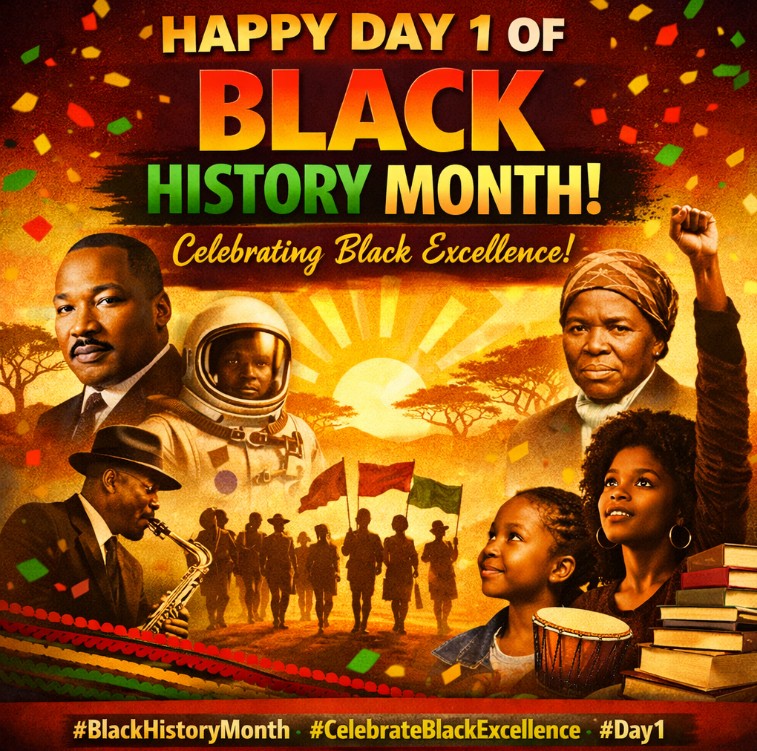
Happy Day 1 of Black History Month!
Today, we begin a month of celebration, reflection and recognition. Black History Month is more than remembering the past – it is honouring the struggles, triumphs and contributions of Black people everywhere and lifting the voices, stories and legacies that have shaped our world.
Let us take this first day to celebrate resilience, creativity, innovation and leadership. From artists and scientists to educators and activists, Black history is full of examples of courage, brilliance and perseverance.
This month, let us commit to learning, sharing and standing in solidarity. Let us amplify voices, honour achievements and keep pushing for equality, justice and opportunity for all. Here is to a month of reflection, growth and inspiration.
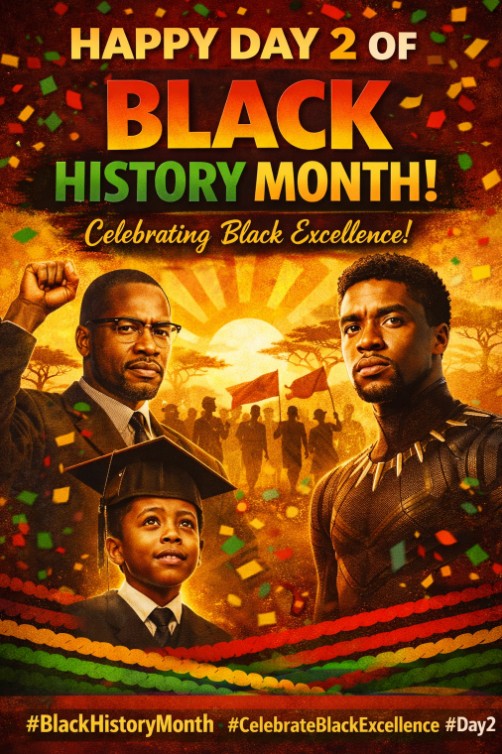
Happy Day 2 of Black History Month!
Today we honour two powerful legacies, Malcolm X and Chadwick Boseman men who, in very different ways, embodied strength, purpose and pride in Black identity. Both were taken from us far too early, yet the impact of their lives continues to echo with ALL generations. Let us reflect on the power of voice, the importance of representation and the responsibility to carry these legacies forward.
Malcolm X challenged the world to confront injustice without flinching. He stood for self-respect, self-determination and truth, urging Black people to know their worth, question systems of power and demand dignity by any means necessary. His evolution reminds us that growth, learning and courage are acts of resistance.
Chadwick Boseman, through his art and quiet leadership, showed the world the power of representation. He understood the weight of legacy and used his platform to uplift Black stories with dignity, depth and respect. Even while facing personal battles, he continued to inspire millions by choosing purpose over comfort and excellence over recognition.
Together, their legacies remind us that resistance can be loud or quiet, revolutionary or artistic, but it is always rooted in pride, responsibility and love for the people.
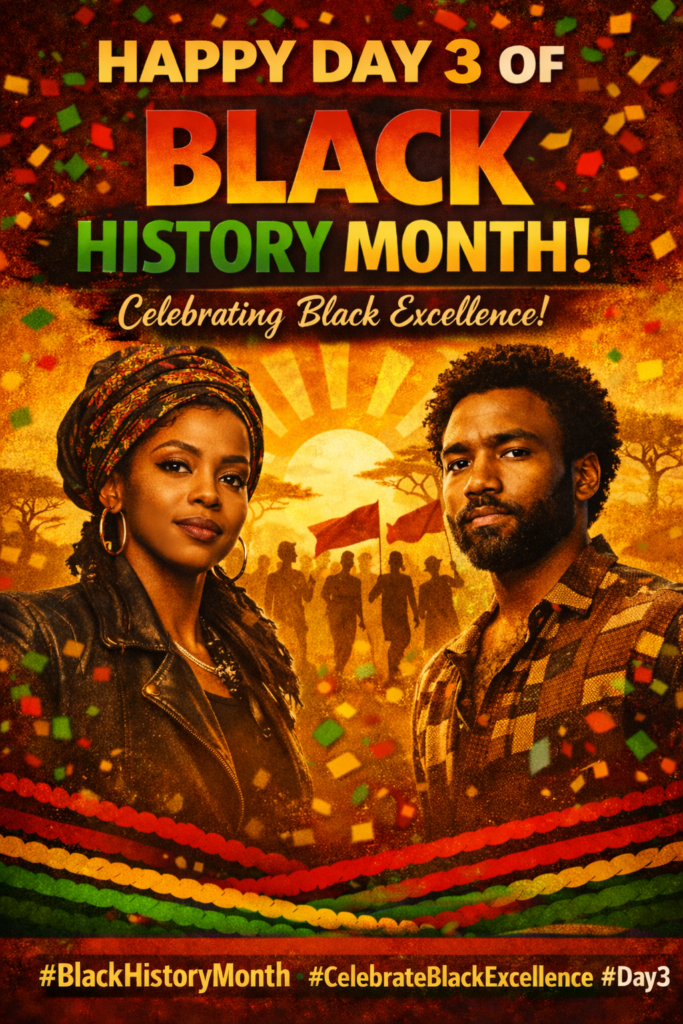
Happy Day 3 of Black History Month!
Lauryn Hill is a symbol of fearless Black creativity and truth. As a groundbreaking artist, she reshaped hip-hop and soul by centring Black womanhood, spirituality and self-worth. Through The Miseducation of Lauryn Hill, she reminded the world that Black voices can be both vulnerable and powerful, poetic and revolutionary. Her legacy continues to inspire generations to speak truth, honour culture and create without compromise.
Donald McKinley Glover Jr. (Childish Gambino) represents the evolution of Black excellence in the modern era. As a writer, actor, musician and director, he has pushed boundaries across film, television and music while challenging how Black stories are told. Through projects like Atlanta and This Is America, he confronts identity, systemic injustice and culture with bold honesty and artistic depth. His work proves that Black creativity has no limits.
Black History Month is a celebration of our past, our present and the brilliance still unfolding. Today, we honour the voices, vision and impact that continue to shape culture, challenge systems and inspire generations. Black excellence lives on.
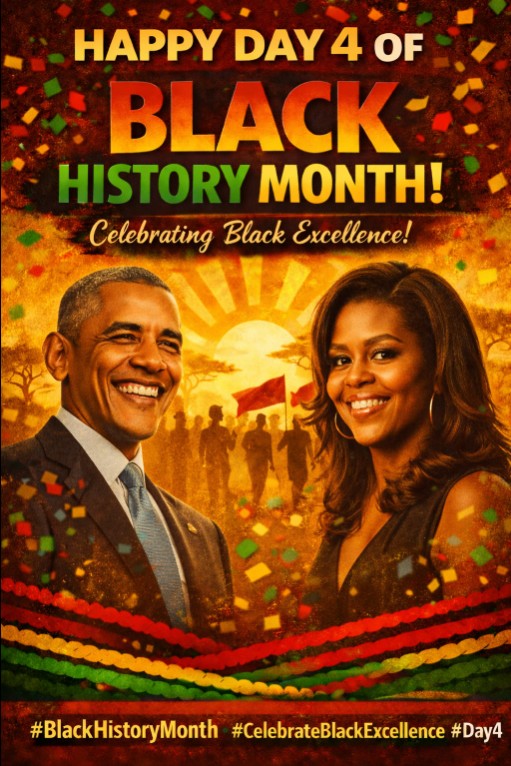
Happy Day 4 of Black History Month!
Michelle Obama represents the power of Black womanhood, grace and purpose. As First Lady, she used her platform to uplift communities, advocate for education, health and young people,and inspire confidence in being unapologetically oneself. Her voice, strength and authenticity continue to empower generations to embrace their worth, tell their stories and lead with compassion and courage.
Barack Obama stands as a living chapter of Black history. As the first Black President of the United States, he redefined what was possible through perseverance, intellect and steady leadership. His journey reflects generations of struggle, hope and progress, proving that Black excellence can rise to the highest levels of leadership while remaining grounded in service, integrity and unity.
Black History Month is not a celebration of pain, slavery, or oppression. It is a recognition of resilience, brilliance, innovation and impact. While we acknowledge the struggles our ancestors endured and the leaders who fought for civil rights, our story does not begin or end there.
We are more than survival. We are creators, leaders, thinkers, artists, builders and visionaries. Black history is not only about what we overcame, it is about what we continue to contribute to the world. Our history is rich, powerful and still being written.
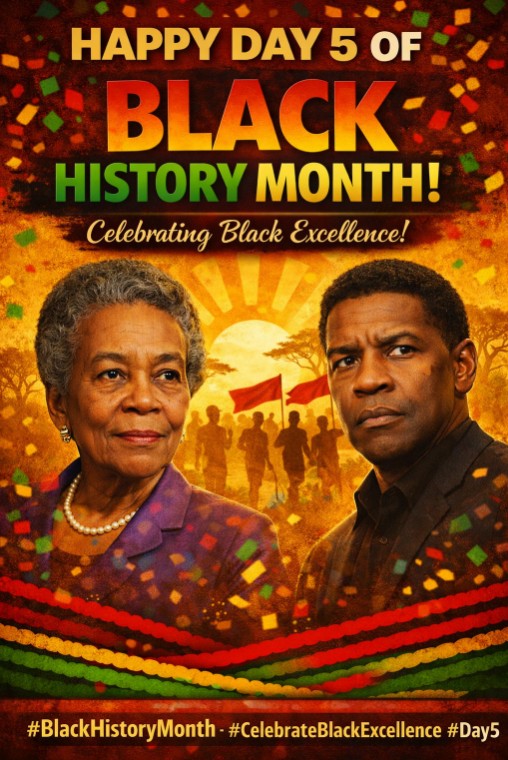
Happy Day 5 of Black History Month!
Today we honour two figures who represent Black excellence in very different arenas, yet are united by principle, courage and truth.
Dame Mary Eugenia Charles made history as Dominica’s first Prime Minister and the Caribbean’s first female head of government, serving from 1980 to 1995, a full 15 years of steady, disciplined leadership. She took office at a moment of national crisis, when Dominica was economically fragile and politically unstable. Her administration restored financial order, strengthened democratic institutions and re-established international credibility for the country.
Dame Eugenia was known for integrity over popularity. She resisted corruption, insisted on fiscal responsibility and governed with a firm belief that public office was a public trust, not a personal entitlement. Under her leadership, Dominica stabilized its economy, rebuilt confidence in government and maintained democratic norms at a time when many small states struggled to do so. She proved that strength does not need theatrics and that leadership does not require noise to be effective.
Denzel Washington, on the other hand, has used his global platform not just to entertain, but to challenge. Over decades, he has spoken plainly about racism, personal responsibility, media manipulation and the dangers of a society addicted to outrage without accountability. Long before it was fashionable, he warned that social media rewards ignorance, amplifies division and often fails to do the job of informing the public responsibly.
Denzel has consistently criticized systems that profit from anger while avoiding truth, calling out how narratives are shaped to distract rather than educate. He has spoken openly about racism, not as a talking point, but as a lived reality while also urging young people to demand more of themselves, their leaders and the institutions that shape public opinion.
Together, Dame Eugenia Charles and Denzel Washington remind us that Black excellence is not one thing. It is discipline and dignity. It is speaking truth in quiet rooms and loud ones. It is governing with principle and using influence with purpose.
Day 5 is about leadership that lasts and voices that matter, even when they make people uncomfortable. That is Black history. That is Black excellence.
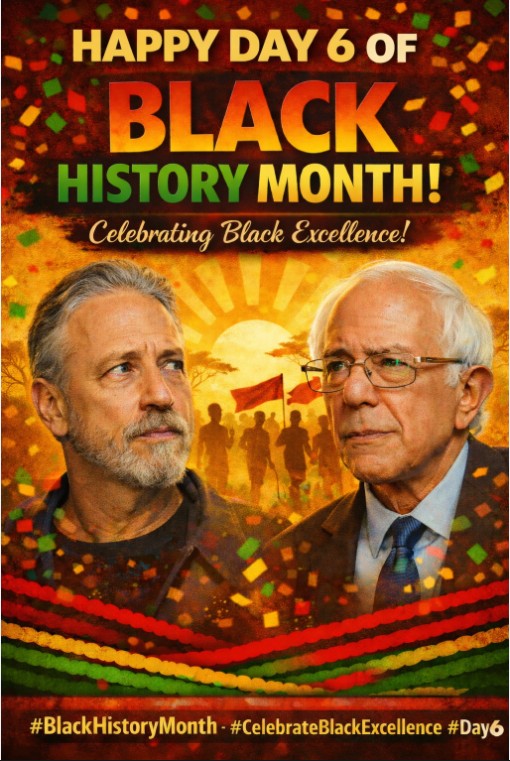
Happy Day 6 of Black History Month!
Black History Month celebrates Black excellence – the leadership, creativity and resilience that have shaped generations. That focus is non-negotiable. Recognizing allies does not diminish it; it highlights moments when progress advanced because people with access chose to confront injustice.
Jon Stewart leveraged satire to expose power, hypocrisy and abuse, especially when it affected marginalized communities. He uses a white, mainstream platform to ask questions others avoided and to amplify voices that are ignored. By breaking down complex issues into plain language, he helps audiences see how policy, media and power intersect with race and inequality. He does not claim moral authority or perfection, but he consistently pushes accountability upward. Impact matters more than perfection.
Bernie Sanders is acknowledged not because he is perfect, but because he has been consistent. Long before it was popular, he spoke about mass incarceration, wealth inequality and a system that punishes poverty.
He repeatedly makes the connection between race and class, recognizing that communities of colour are disproportionately targeted, underpaid and locked out of opportunity. Respect comes from showing up before the cameras cared and staying when they moved on – insisting that racial justice without economic justice is incomplete.
As we honour Black History Month, let us celebrate not only the extraordinary achievements of Black communities but also the power of action and accountability. Change happens when courage meets opportunity, when voices rise, when systems are challenged and when each of us, in our own way, chooses to stand for justice.
Let this month remind us that progress is not inevitable, it is built by those who dare to listen, to act and to create a world where equality is more than a promise, it is a reality.
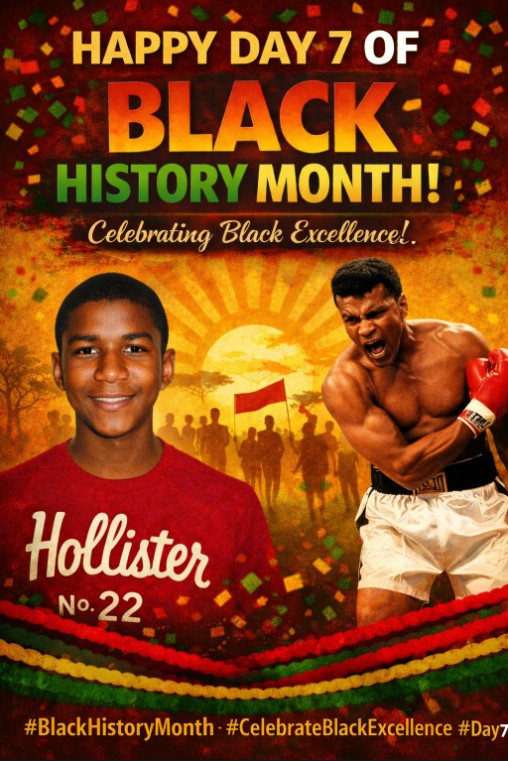
Happy Day 7 of Black History Month!
During Black History Month, we honour the lives of Trayvon Martin and Muhammad Ali, two figures whose stories have shaped conversations about justice, courage and dignity.
Trayvon Martin was a 17 year old Black teenager whose life was tragically taken in 2012. He was a young person with dreams, family and a future ahead of him. Though he was not a public figure, his death sparked national and global conversations about racial profiling, justice and the treatment of Black youth in society.
Trayvon’s story became a turning point, inspiring movements that demand fairness, accountability and equal protection under the law. Remembering Trayvon is not about what happened to him, but about what his life represents: the right of every person to live without fear and the urgent need to stand against injustice.
Muhammad Ali, a boxer, activist and global icon, was not just a great champion in the ring; he was a champion of principle. He stood up for his beliefs, even at great personal cost and proudly embraced his identity, showing Black people everywhere that dignity and self-respect matter. His courage, humour and activism inspired generations to fight for justice, equality and peace.
Honouring Trayvon Martin and Muhammad Ali during Black History Month reminds us that true greatness is measured not just by victories but by courage, integrity and the impact one has on creating a more just and compassionate world.
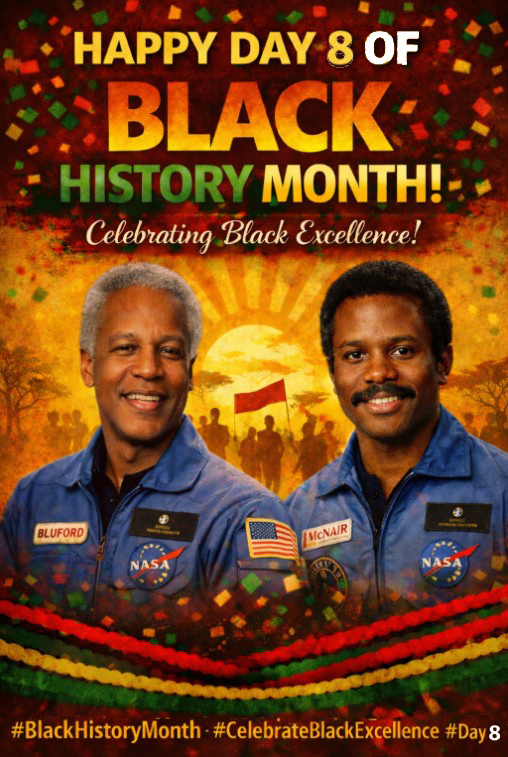
Happy Day 8 of Black History Month!
Black history is a story of courage that dares to rise higher, dream bigger and reach further than the limits imposed upon it. It is a history written not only in struggle, but in discovery, brilliance and bold exploration. Today, we honour two men whose journeys carried Black excellence beyond Earth itself, reminding us that the sky was never the limit.
Guion Stewart Bluford Jr. had a distinguished career as both a military officer and a NASA astronaut. Before joining NASA, he served as a U.S. Air Force fighter pilot and flight test engineer, flying over 140 combat missions during the Vietnam War.
In 1983, he made history aboard Space Shuttle Challenger on mission STS-8, becoming the first African American in space. Bluford went on to fly four space shuttle missions, logging more than 688 hours in space and later continued to contribute to aerospace engineering and education, mentoring future generations in science and technology.
Ronald E. McNair was a brilliant physicist, accomplished astronaut and gifted musician who earned a doctorate in laser physics from MIT. Selected by NASA in 1978, he flew aboard Space Shuttle Challenger on mission STS-41-B in 1984, becoming the second African American in space.
On January 28, 1986, McNair tragically lost his life in the Challenger disaster when the shuttle broke apart shortly after launch. His death was a profound loss to science, space exploration and the world, but his legacy endures through scholarships, schools and programs that continue to inspire young people, especially those from underrepresented communities to pursue excellence in science and discovery.
Guion Stewart Bluford Jr. and Ronald McNair remind us that Black history is not confined to the past or limited to the ground beneath our feet. Their lives prove that courage, intelligence and determination can carry us beyond barriers once thought impossible.
As we honour their legacies, we are reminded that every new generation stands on their shoulders and that the future, like the stars they reached for, is still within reach.
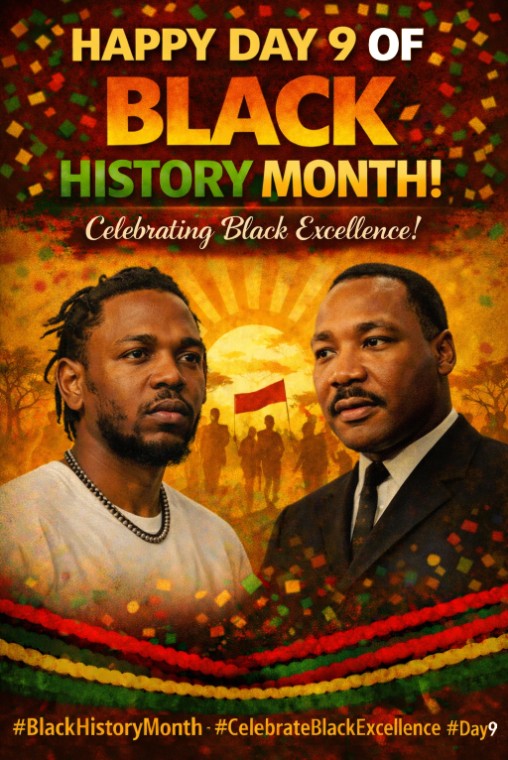
Happy Day 9 of Black History Month!
Black History Month is a time to honour the voices that challenge injustice, inspire truth and push society forward. It is a celebration of resistance, creativity, leadership and the power of words to change the world.
Today, we recognize two men from different generations whose voices reshaped culture and conscience – Kendrick Lamar and Dr. Martin Luther King Jr., each using truth, courage and conviction to awaken a nation.
Kendrick Lamar represents the modern voice of Black truth and storytelling. Through his music, he confronts systemic racism, identity, trauma, faith and survival with honesty and depth. His work elevates hip-hop into a platform for social reflection and cultural preservation, giving voice to experiences often ignored or misunderstood. Kendrick’s influence proves that art remains one of the most powerful tools for education, resistance and healing within Black history.
Dr. Martin Luther King Jr. stands as one of the most influential leaders in Black history and American history. Through nonviolent resistance, moral clarity and unwavering faith in justice, he led the Civil Rights Movement and helped dismantle legalized segregation in the United States.
His words – spoken from pulpits, prisons and public squares – continue to define the fight for equality, reminding the world that justice, dignity and freedom are not optional, but essential.
We celebrate Day 9 with Kendrick Lamar and Dr. King and because Black history is living, breathing and evolving. It is carried forward through marches and melodies, sermons and songs. Their legacies remind us that speaking truth, whether from a podium or a microphone, can move people, challenge power and inspire generations. Black History Month honours not only where we have been, but the voices that continue to lead us forward.
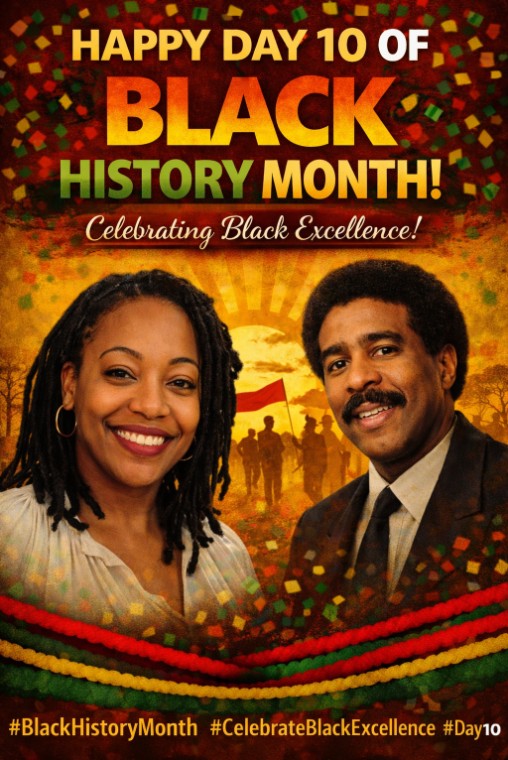
Happy Day 10 of Black History Month!
Black history is built by those who see a need and choose to answer it. It is shaped not only by global icons but by individuals who transform their communities through courage, compassion and vision. Today, we celebrate a legacy of brilliance and impact, honouring voices that challenged the world, healed their people and reshaped how we see ourselves.
Kellyn George, a proud daughter of Dominica from the village of Mahaut, is a scientist, advocate and community leader whose work has transformed lives. With a background in chemistry and biology, she pursued advanced scientific research abroad before making the intentional decision to return home and serve her country.
Living with sickle cell disease herself, Kellyn recognized the urgent need for education, awareness and support for those affected across the island. She founded the Sickle Cell Cares Foundation, creating a vital network of advocacy and care for individuals and families living with the condition. Her leadership brought long overdue attention to a disease impacting a significant portion of Dominica’s population and empowered communities with knowledge and compassion.
Through service, science and lived experience, Kellyn George embodies Black excellence rooted in purpose, proving that true leadership is measured by the lives you uplift.
Richard Pryor was more than a comedian, he was a cultural revolutionary. Rising to prominence in the 1970s and 1980s, Pryor shattered the boundaries of stand-up comedy by speaking with raw honesty about race, poverty, addiction, police brutality and the lived Black experience in America. At a time when many entertainers softened their truth to appeal to mainstream audiences, Pryor did the opposite. He made discomfort unavoidable and turned pain into piercing social commentary.
Through groundbreaking comedy specials and unforgettable film roles, Richard Pryor redefined what comedy could be: fearless, political, vulnerable and unapologetically Black. His influence shaped generations of comedians, many of whom credit him as the reason they felt free to speak their truth. Pryor used laughter as a weapon against racism and hypocrisy, proving that comedy could be both art and resistance. His legacy lives on as a reminder that telling the truth, even when it’s messy, can change culture.
Kellyn George and Richard Pryor remind us that Black history lives in both service and self-expression. It lives in the quiet, determined work of uplifting a community and in the bold, fearless truth that challenges a society to do better. As we celebrate their legacies, we honour the many ways Black excellence shows up, through care, courage, creativity and an unbreakable commitment to our people. Black history is not only something we remember; it is something we continue to build.
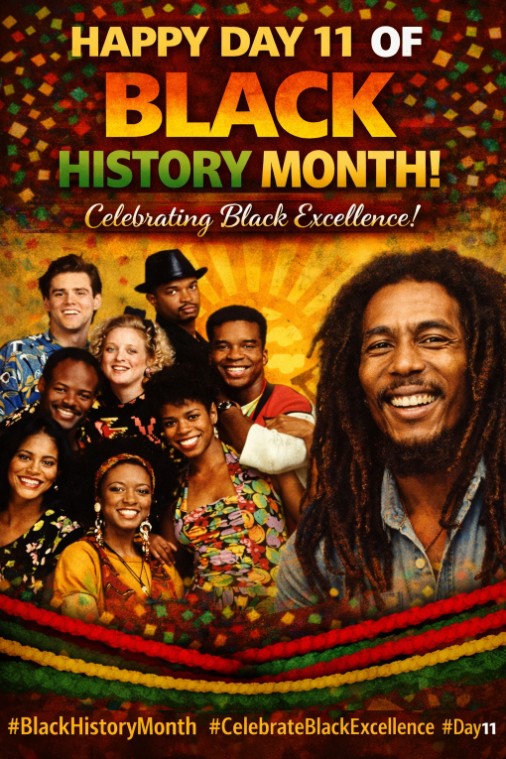
Happy Day 11 of Black History Month!
Black History Month celebrates the power of culture, how music, comedy and art shape identity, challenge injustice and uplift communities across the globe. Today, we honour two cultural forces that transformed entertainment and expanded the global voice of Black expression: In Living Color and Bob Marley.
In Living Color was more than a comedy show, it was a breakthrough moment in television. At a time when mainstream platforms rarely centred Black creativity in bold, unapologetic ways, the show showcased a cast of immensely talented Black comedians, writers, dancers and actors who pushed boundaries and redefined sketch comedy. It created space for new stars, amplified diverse voices and used humour to confront race, politics and social realities. The show proved that Black creativity could lead, innovate and dominate prime-time television while staying authentic and fearless.
Bob Marley, on the other hand, used music as a global language of resistance, unity and liberation. Through reggae, he carried messages of justice, African pride, spirituality and empowerment far beyond Jamaica, making him one of the most influential cultural figures in the world. Songs like Redemption Song, One Love and Get Up, Stand Up became anthems of hope and resilience, reminding oppressed people everywhere of their strength and dignity.
Together, In Living Colour and Bob Marley represent the brilliance of Black cultural expression, one through laughter that challenged systems, the other through music that stirred movements. During Black History Month, we celebrate them because they did not just entertain; they shifted narratives, inspired generations and helped shape how the world sees Black creativity and power.
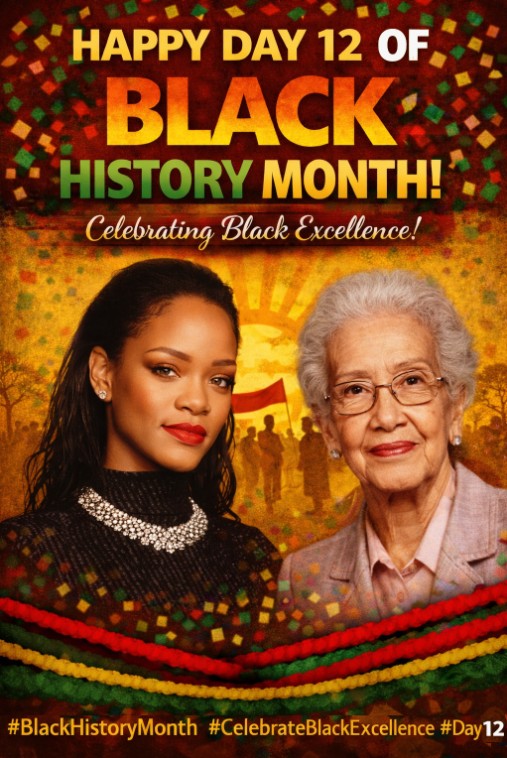
Happy Day 12 of Black History Month!
Black history is brilliance in motion. It is innovation that changes the world and creativity that shapes culture. Today, we celebrate two extraordinary women who transformed their industries in completely different ways, Rihanna and Katherine Johnson, each redefining what is possible for Black women globally.
Rihanna is more than a global music icon, she is a cultural force. Born in Barbados, she rose to international fame through music, but her impact extends far beyond the charts. As an entrepreneur, she revolutionized the beauty and fashion industries with inclusive brands that centered diversity, representation and authenticity. Through Fenty Beauty and Savage X Fenty, she challenged long standing standards and created space for women of all shades, sizes and backgrounds.
Beyond business, Rihanna has consistently used her platform for philanthropy, education initiatives and global humanitarian efforts. Her success represents modern Black excellence, creative, fearless, innovative and unapologetically inclusive.
Katherine Johnson was a mathematical genius whose brilliance helped launch astronauts into space and bring them safely home. As a NASA mathematician, her calculations were critical to some of America’s most historic space missions, including John Glenn’s orbit around Earth and the Apollo moon missions. At a time when both racism and sexism created enormous barriers, she quietly and powerfully proved that intellect has no color and excellence has no gender.
Her story, brought wider recognition through Hidden Figures, revealed the vital role Black women played in shaping scientific history. Katherine Johnson’s legacy is one of precision, perseverance and groundbreaking achievement.
We celebrate Rihanna and Katherine Johnson because Black history is not limited to one field, it lives in laboratories and on stages, in boardrooms and in outer space. Their lives remind us that whether through equations or entrepreneurship, science or song, Black women continue to move the world forward.
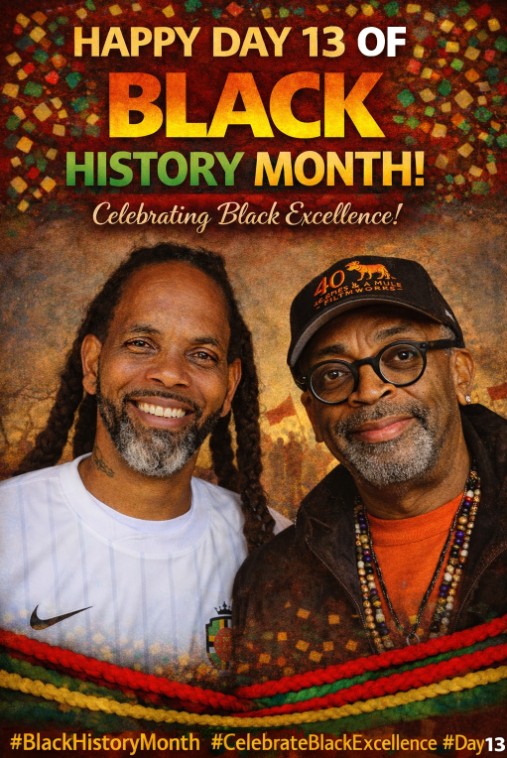
Happy Day 13 of Black History Month!
Black History Month is not only about remembering the past, it is about honoring those who actively build the future of our people. Today we recognize two men who, in very different arenas, have devoted their lives to uplifting Black communities: Dunstan “Maggie” Peters of Dominica and legendary filmmaker Spike Lee.
Dunstan “Maggie” Peters has poured his energy into developing young people through sport. A former competitive player turned coach and organizer, Maggie has been deeply involved in Dominica’s National League basketball system for years. As founder of the 7Six7 Sports Club, he created more than just a team, he built a pathway. Through youth camps, leagues, mentorship and recruitment initiatives, he has helped young Dominicans sharpen their skills, gain exposure and pursue opportunities beyond the island.
Even in the face of leadership challenges, including his removal as President of the Dominica Amateur Basketball Association, Maggie’s commitment to youth development never wavered. As Director of Recruitment and Talent Identification for DA Next Level Sports Management & Recruiting Group, he continues to advocate for athletes, organize programs and create space for growth. For him, basketball is more than a game, it is discipline, direction and hope.
Spike Lee, on the other hand, has used the power of film as his court. Through bold storytelling, he has challenged narratives, amplified Black voices and forced audiences around the world to confront uncomfortable truths. His films highlight injustice, resilience, culture, pride and the complexity of Black life. He tells our stories unapologetically, ensuring that Black history is not erased, softened, or rewritten.
Though one works on hardwood floors and the other behind a camera, both men share a common devotion: empowering Black people, preserving our stories and creating opportunities for the next generation. Black History Month reminds us that leadership comes in many forms, a whistle around the neck or a camera in hand. What matters is the commitment to community, culture, and collective progress.
So today we celebrate builders. We celebrate storytellers. We celebrate those who refuse to let our youth or our history be overlooked.
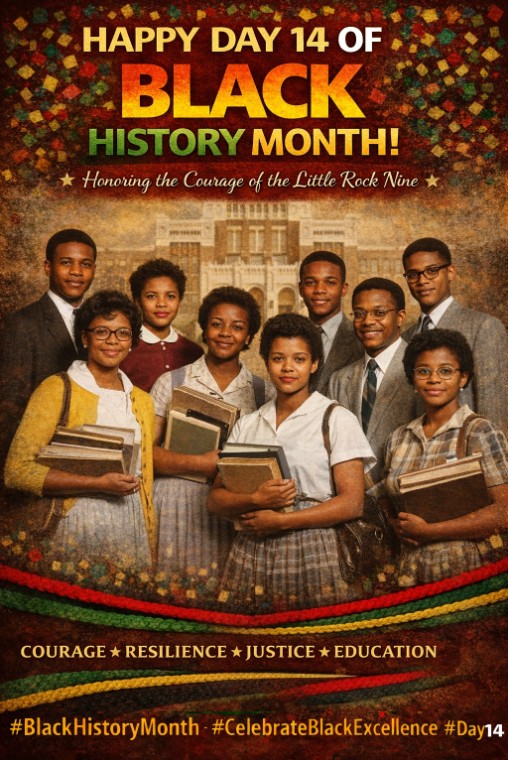
Happy Day 14 of Black History Month!
On this Day 14 of Black History Month, we honor nine brave students who changed the course of American history. The Little Rock Nine:
- Ernest Green
- Elizabeth Eckford
- Jefferson Thomas
- Terrence Roberts
- Carlotta Walls LaNier
- Minnijean Brown Trickey
- Gloria Ray Karlmark
- Thelma Mothershed Wair
- Melba Pattillo Beals
We all have seen the iconic image of the Little Rock Nine, leaving Little Rock Central High School with armed soldiers standing guard, as it is one of the most powerful photographs of the Civil Rights Movement.
In that picture, you see young Black teenagers leaving through the school doors while members of the U.S. Army’s 101st Airborne Division stand at attention. Their uniforms are crisp. Their rifles are visible. The soldiers form a protective barrier between the students and the hostile crowds gathered outside. The image captures a moment that should never have required military force: children going to school.
The tension in the photo is undeniable. The soldiers represent federal authority stepping in to enforce desegregation after Arkansas Governor Orval Faubus attempted to block the students entry. President Dwight D. Eisenhower ultimately sent federal troops to ensure the 9 students safety and uphold the law.
The Little Rock Nine faces often appear calm and determined despite the chaos surrounding them. That calm strength is what defines the image. They were not soldiers , yet they stood on the front lines of change. They were just 9 students with books in their hands, but history placed courage on their shoulders. Because of the Little Rock Nine, the doors of opportunity opened wider, not just at Little Rock Central High School, but across America. Their quiet bravery forced a nation to confront its conscience and reminded the world that justice is not given freely, it is demanded through resilience.
On this Day 14 of Black History Month, we do more than remember them, we honor their strength, we teach their story and we carry their legacy forward.
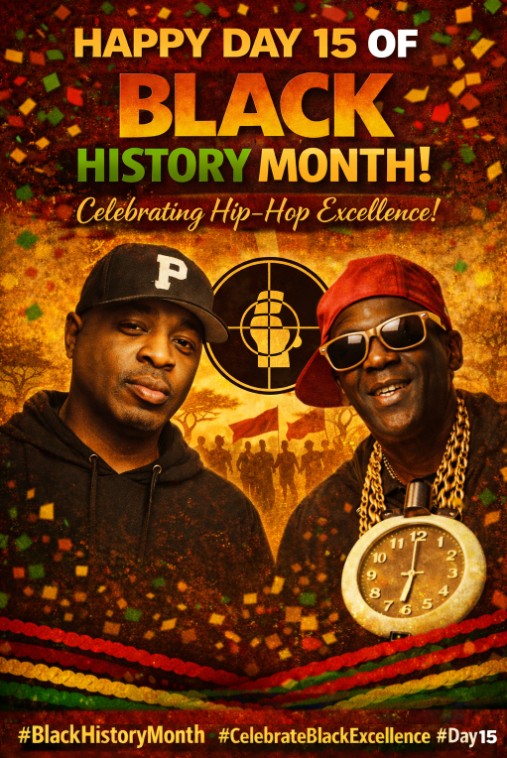
Happy Day 15 of Black History Month!
Today we celebrate the revolutionary impact of Chuck D and Flavor Flav, the powerful voices behind Public Enemy, a group that transformed hip-hop into a global platform for Black consciousness.
From the late 1980s onward, Public Enemy did more than make music, they delivered messages. Their lyrics confronted systemic racism, police brutality, economic inequality, media bias and the miseducation of Black communities. At a time when mainstream outlets often ignored or distorted Black realities, Chuck D described rap as “the Black CNN,” using it to report truth from the streets.
Albums like – It Takes a Nation of Millions to Hold Us Back and Fear of a Black Planet became cultural landmarks. Songs such as “Fight the Power” were not just hits, they became anthems of resistance and pride, energizing movements and reminding Black communities of their strength and history.
Chuck D’s commanding voice brought political clarity and unapologetic pride.
Flavor Flav’s energy and bold presence amplified the message in a way that made it unforgettable. Together, they fused activism with artistry, proving that entertainment could educate and mobilize.
Their contribution to Black history lies in three powerful areas:
- Political Awareness Through Music – They made social justice central to hip-hop culture, influencing generations of artists to speak boldly about inequality.
- Cultural Pride – They celebrated Black identity, heritage, and resistance at a time when such pride was often criticized or feared.
- Global Impact – Their music reached audiences worldwide, spreading conversations about racism and empowerment far beyond the United States.
Public Enemy did not ask for permission to tell the truth. They demanded that Black voices be heard.
On this Day 15 of Black History Month, we honor not just their music, but their mission to challenge power, uplift community and keep the fight for justice alive.
Happy Day 16 of Black History Month!
Black History Month is not only about remembering struggle, but it is about recognizing Black excellence, leadership and contribution in every generation. Viola Davis and Michael B. Jordan represent that truth clearly and powerfully.
The Viola Davis story is one of discipline, resilience and earned greatness. Rising from deep poverty to become one of the most respected actors in the world, she did not rely on controversy or spectacle; she relied on talent, preparation and truth. She is one of the most accomplished actors in history, a producer who creates space for Black stories told with dignity and a vocal advocate for childhood hunger, poverty relief and education.
Viola Davis challenges Hollywood’s limitations on Black women by refusing to shrink, refusing stereotypes and insisting that Black lives be portrayed with complexity and humanity. Her impact reaches far beyond film; she shows young people that excellence is a form of resistance.
Michael B. Jordan represents a new generation of Black leadership rooted in ownership, professionalism and vision. He has built his career without scandal, without hate and without division, proving that success and integrity can coexist.
He is a leading actor who has reshaped how Black men are seen on screen, a producer creating opportunities for Black writers, directors, crews and a model of discipline, focus and long-term thinking. Michael B. Jordan’s importance lies not only in what he does, but how he does it, with preparation, respect and intention. He shows young Black men that power does not need to be loud to be effective.
Together, Viola Davis and Michael B. Jordan represent Black history in motion: not defined by oppression, not trapped in the past and not dependent on controversy. They reflect what Black history truly is – achievement, leadership, creativity and legacy-building.
Honouring Viola Davis and Michael B. Jordan during Black History Month reminds us that Black excellence is not rare; it is continuous. Their lives tell young people a simple, powerful truth, you can be excellent. You can be disciplined. You can build something that lasts. That is Black history.
Happy Day 17 of Black History Month!
Black History Month is not only about honoring the past, it is about recognizing those shaping our present and influencing our future.
Today we highlight three powerful examples of Dominican voices using digital platforms to inform, uplift, and engage our people.
Siri Exposing has become a bold online presence in Dominica. Known for relentless commentary and sharp criticism, the platform consistently questions government decisions and calls for transparency, accountability and reform.
In a small nation where politics can feel personal, voices like this spark debate, demand answers and challenge leadership, including Roosevelt Skerrit and his administration.
Whether one agrees or disagrees, platforms like Siri Exposing represent something important in a democracy: the willingness of citizens to speak up, push back and demand better for their country.
Mystelics Vlogs is another influential Dominican digital voice. Through vlogging, storytelling and commentary, the platform captures Dominican life while also engaging in national conversations.
Mystelics highlights culture, daily life and at times social and political concerns affecting the people. The channel reflects a modern generation of Dominicans who are using YouTube and social media not just for entertainment, but for awareness and dialogue.
It shows how digital media has become a powerful tool for civic engagement in the Caribbean.
Fabz Vibration, on the other end of the spectrum, Fabz Vibrations brings a lighter, joyful energy to the Dominican online space.
As a local YouTube streamer, Fabz showcases community events, family moments, favorite Dominican foods, cooking sessions, friendly games with his wife (even when losing with honor!) and the simple beauty of everyday life.
His channel is feel-good, authentic and uplifting, reminding us that Black excellence is not only in protest or politics, but also in love, laughter, family and culture.
Fabz Vibrations is the kind of content that connects Dominicans at home and abroad, strengthening cultural pride across the diaspora.
Black History Month reminds us that history is not only written in books, it is written in real time by those bold enough to speak, create, question and uplift. From holding leadership accountable, to preserving culture, to spreading joy across screens near and far, these Dominican voices prove that our people are not silent, not passive, and not invisible.
- They are shaping narratives.
- They are influencing minds.
- They are building legacy.
And that, too, is Black history in motion.
Happy Day 18 of Black History Month!
Today, we celebrate two extraordinary cultural architects of Dominica whose work helped shape national identity, political awareness, and Caribbean artistic expression.
Phyllis Shand Allfrey was a trailblazing writer, journalist and political leader. As a co-founder of the Dominica Labour Party and one of the first women to hold ministerial office in the Caribbean, she used her voice to advocate for workers’ rights, social justice and self-governance during a critical period of political transformation.
Her novel The Orchid House explored themes of colonialism, race, class and Caribbean identity, giving depth and humanity to the lived experiences of West Indian people. Through both literature and politics, she challenged systems of inequality and helped lay the foundation for modern Dominican democracy.
Alwin Bully is one of Dominica’s most influential cultural visionaries. A playwright, artist, cultural administrator and educator, he dedicated his life to preserving and promoting Caribbean heritage. As the designer of Dominica’s National Flag and a founder of the People’s Action Theatre, his impact is woven into the artistic and national fabric of the country. His work uplifted local storytelling, strengthened cultural pride and ensured that Dominican voices were centred in the arts.
We celebrate them because Black history is not only the story of resistance, it is the story of nation building, cultural preservation, artistic excellence and visionary leadership. Their legacies remind us that identity matters, culture matters and the power of words and art can shape a nation.
Happy Day 19 of Black History Month!
Today we honor two extraordinary figures from different centuries whose courage and conviction changed the world in very different, yet equally powerful ways.
Harriet Tubman was born into slavery, yet she refused to let chains define her destiny. After securing her own freedom, she returned again and again to the South, risking capture and death to guide hundreds of enslaved men, women, and children to liberation through the Underground Railroad.
She later served as a scout, spy and nurse during the Civil War. Tubman did not wait for permission to lead. She moved with faith, strategy and fearless determination. Her life reminds us that true leadership is rooted in sacrifice, resilience and an unbreakable commitment to justice.
Generations later, Trevor Noah uses a different battlefield, the global stage. As a comedian, author and former host of The Daily Show, he has challenged racism, inequality and political hypocrisy with intelligence and humor.
Growing up in apartheid South Africa, where his very birth was considered illegal, Noah learned early how systems of oppression shape lives. Today, he transforms painful histories into conversations that educate and unite audiences worldwide. Through storytelling, he proves that humor can be a tool for truth and that laughter can open doors to understanding.
One fought with quiet strategy and daring action. One fights with words, wit, and global influence. Different eras. Different methods. The same unwavering pursuit of freedom and dignity. Their legacies remind us that courage takes many forms, sometimes it is a lantern in the dark of night and sometimes it is a microphone on a world stage.
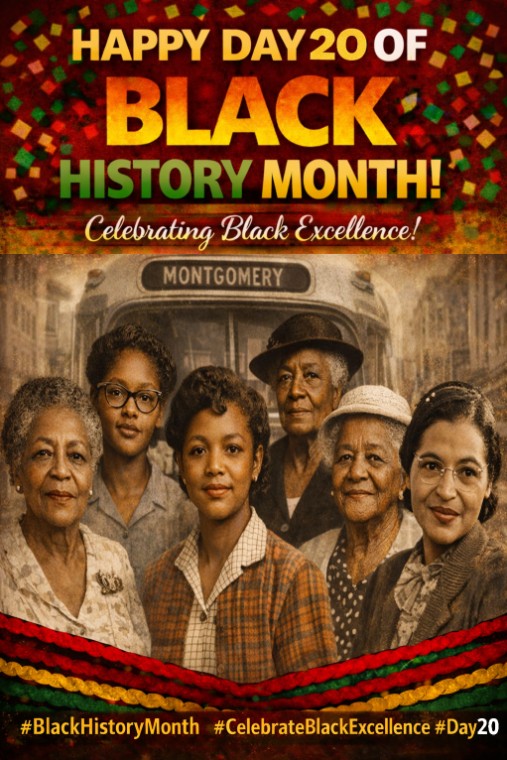
Happy Day 20 of Black History Month!
Today we honour our Black women who have always been the backbone of progress. They do not wait for permission. They do not ask to be saved. They see what is wrong, decide it will not continue and build the Path Forward themselves. This is not just history, it is a reminder of what happens when women know their power and use it.
In 1955, in Montgomery, Alabama, Black lives were forced to live under segregation laws that controlled even the most basic parts of daily life. On city buses, Black passengers were required to sit at the back, give up their seats to white riders and accept humiliation in silence. Refusal meant arrest, fines and danger. This was not just inconvenience, it was a system designed to break dignity. And it was Black women who stood up to it first.
Women like Viola White, Claudette Colvin, Mary Louise Smith, Mary Wingfield, Aurelia Browder and Rosa Louise McCauley Parks were not seeking fame or history books. They were teenagers, mothers, workers and elders who carried the weight of their communities, and still found the strength to say no. Their arrests were not moments of weakness; they were acts of extraordinary bravery in a society built to punish Black resistance.
Their courage ignited the Montgomery Bus Boycott, a 381-day mass protest that required discipline, sacrifice and unbreakable unity. Black women did not just start the movement, they sustained it. They organized carpools, fed families, walked miles to work and held communities together while the world watched. This was leadership in its purest form: practical, resilient and rooted in care for others.
The boycott forced the U.S. legal system to confront segregation, resulting in a federal ruling that ended bus segregation in Montgomery. That victory proved something the world keeps learning over and over again: when Black women commit to change, systems move. When Black women lead, injustice cracks. When Black women organize, history bends.
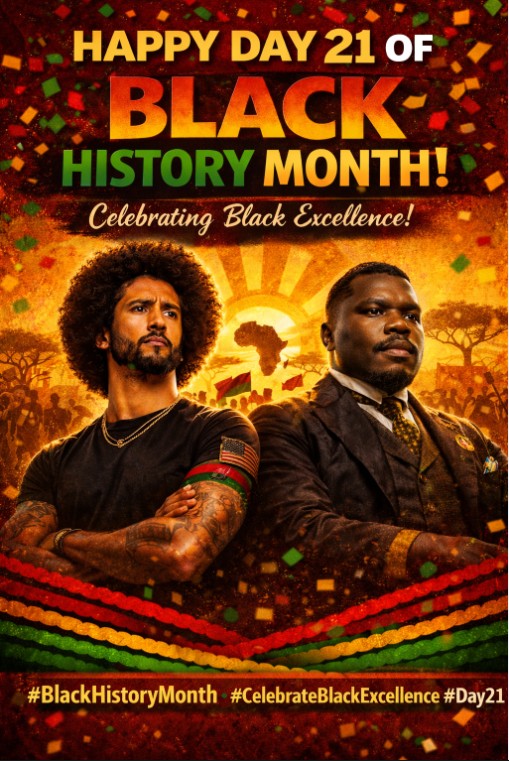
Happy Day 21 of Black History Month!
Black history is not a single chapter, it is an ongoing struggle for dignity, justice and truth. Two figures who embody this reality, across different eras are Colin Kaepernick and Marcus Garvey.
When Colin Kaepernick knelt during the national anthem, a peaceful protest in plain sight that was deliberate and rooted in a long tradition of nonviolent resistance. He was calling attention to police brutality and systemic racism, not the fabricated, embellished fake outrage that falsely accused him of disrespecting soldiers, the flag, or the country.
What followed revealed something even deeper and far more uncomfortable.
Kaepernick was not only pushed out of the NFL, he was abandoned. A league of Black athletes, many of whom privately agreed with his message, refused to publicly support him when it mattered most. Fear of contracts, endorsements and retaliation kept many silent. In doing so, they allowed one man to absorb the full punishment for speaking a truth that affected all of them and their families.
At the same time, the NFL’s power structure, dominated by overwhelmingly white ownership and coaching ranks, closed ranks. They made it perfectly clear that challenging the status quo came with consequences. Kaepernick went from a Super Bowl quarterback to unemployed, sending an ominous warning to anyone watching: this is what happens when you speak out.
He lost his entire career not because of performance, but because of conscience. The cost was immense. He lost his place in the NFL, lost major endorsements and was stripped of institutional support by powerful organizations that chose comfort over justice.
Marcus Garvey was one of the most influential Black leaders of the 20th century. He believed that Black people worldwide deserved pride, economic independence and control over their own destiny. Through the Universal Negro Improvement Association (UNIA), Garvey built a global movement that emphasized unity, self-reliance and cultural pride.
Though controversial in his time and relentlessly targeted by governments, Garvey’s ideas laid the groundwork for Pan-Africanism, Black nationalism and later civil rights movements. At the heart of his vision was a simple truth – a people who know their worth can never be permanently subdued.
Marcus Garvey faced a similar fate as Colin Kaepernick. His call for Black pride, economic independence and global unity threatened entrenched power. Governments surveilled him, tried to discredited him and ultimately removed him from the United States.
Like Kaepernick, Garvey was portrayed as dangerous, not because he promoted violence, but because he encouraged Black people to think independently and organize collectively.
The common thread between Kaepernick and Garvey is not controversy, it is retaliation. Both men were punished for stepping outside the roles society was comfortable allowing them to occupy.
Both were abandoned and isolated when solidarity could have changed outcomes. And both exposed an uncomfortable truth: unjust systems rarely collapse from outside pressure alone, they survive because silence from within keeps them alive
Black History Month demands honesty, not comfort. It asks us to remember not only the courage of those who spoke out, but also the cost of abandonment, fear and institutional protection of injustice. Because progress does not only require brave individuals, it requires collective backbone. And history is always watching who stood up and who stepped aside.
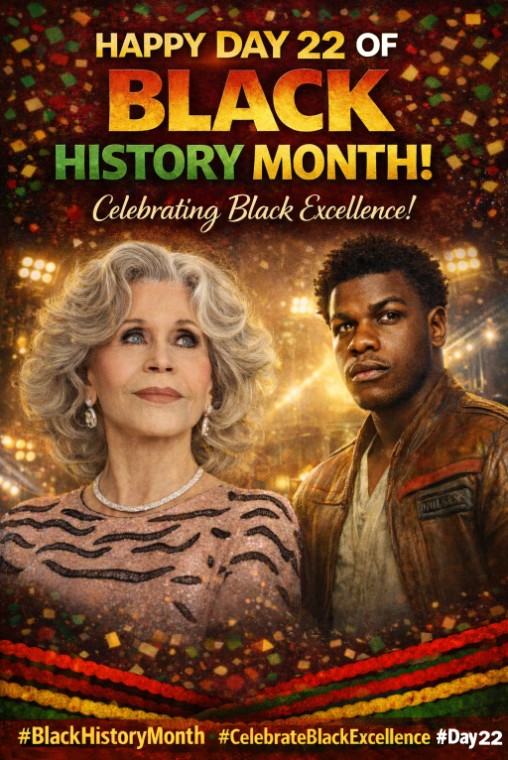
Happy Day 22 of Black History Month!
Black history is not only the story of resistance by Black people themselves. It is also the record of who chose to stand beside that resistance when doing so carried real risk. Progress has never come from silence, comfort, or neutrality. It has come from people willing to disrupt power, accept consequences and act when it was easier not to.
On this Black History Day, it matters who we recognize, not for being perfect, but for putting something on the line.
Jane Fonda’s legacy is often discussed in terms of controversy, but controversy is usually the cost of challenging entrenched systems. For more than six decades, she has used her platform, wealth and visibility to confront injustice – including racism, state violence and mass incarceration at times when doing so damaged her career and public standing.
During the Civil Rights era, she did not simply express support from a distance. She funded organizing efforts, aligned herself with Black-led movements and used her public voice to challenge segregation and racial violence when it was dangerous to do so. Later, she expanded that work to include prison reform, opposition to police brutality and support for organizations fighting racialized incarceration.
What separates Jane Fonda from performative allyship is consistency. She did not retreat when public opinion turned hostile. She accepted surveillance, arrest and long-term reputational damage rather than soften her positions. Even in her later years, she has continued to show up physically, engaging in civil disobedience, funding justice efforts and centering how state violence disproportionately harms Black and marginalized communities.
Her role in Black history is not about speaking for Black people, but about using privilege to challenge systems of power, even when that privilege could have protected her silence.
John Boyega represents a modern form of resistance, one shaped by media visibility, corporate power and the pressure to remain “marketable.” What makes his actions significant is that he rejected safety when silence would have been rewarded.
Boyega did not limit his response to racism and police brutality to statements or social media posts. He showed up at protests, spoke directly to crowds and delivered unfiltered messages that explicitly named systemic racism and state violence. He did so knowing it could jeopardize his entire career in an industry where Black actors are often treated as replaceable or conditional.
Beyond words, Boyega committed resources. He funded Black-led community organizations, supported mental health initiatives and directed attention to grassroots work rather than celebrity driven charities. He also publicly challenged racism within the film industry itself, exposing how institutions profit from Black talent while marginalizing Black voices.
When Boyega said, “I don’t know if I’m going to have a career after this,” and spoke anyway, that was not rhetoric, it was risk. That moment reflects the ongoing reality of Black history, progress is pushed forward by people willing to lose something to demand something better.
Black History is not meant to be comfortable. It is not about celebrating success without acknowledging sacrifice. It is about understanding that systems of oppression depend on silence and that change requires people – Black and non-Black to actively resist those systems.
Jane Fonda and John Boyega remind us that allyship is not defined by intention, popularity, or branding. It is defined by action, cost and commitment over time. They represent different generations, different contexts and different forms of power, yet both chose to confront injustice rather than benefit from it quietly.
Black history is not finished. It is being written now. And it remembers who showed up when it mattered.
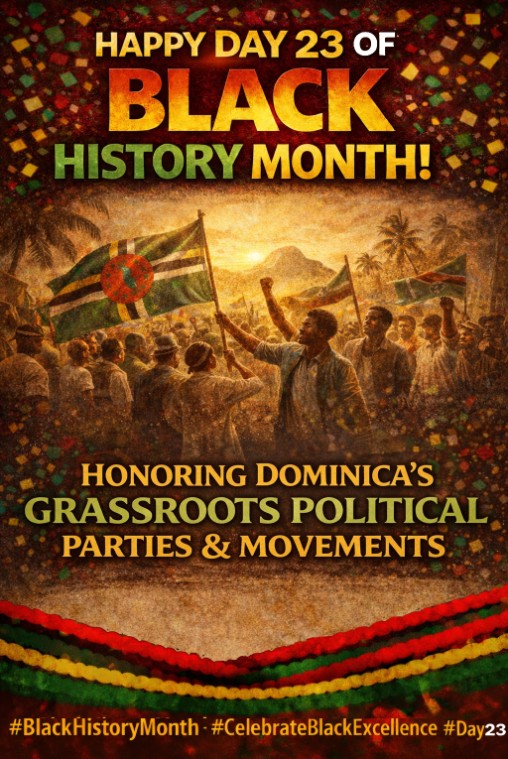
Happy Day 23 of Black History Month!
When we celebrate Black History Month, we often honor the giants – leaders, activists and movements that dominate our textbooks. But in Dominica, the story is richer, more layered and filled with small political parties and movements that dared to dream bigger for ordinary people, even when the odds were stacked against them.
From the People’s Party of Dominica (PPD) and Dominica Progressive Party (DPP), to grassroots movements like the:
- Dominica Liberation Movement (DLM)
- Socialist Workers Party (SWP)
- People’s Democratic Movement (PDM)
- Alternative Peoples’ Party (APP)
and modern initiatives like the People’s Party of Dominica (P‑POD) and Team Unity (TUD), these groups pushed the boundaries of democracy, social justice and citizen participation.
Though most of these parties were eventually overshadowed by larger, better-funded political machines, their impact cannot be measured only in seats won or elections contested. They:
- Fought for workers, farmers and ordinary citizens at a time when colonial and elite interests dominated.
- Promoted ideas of transparency, accountability and grassroots democracy before they were fashionable.
- Challenged the status quo, inspiring generations of activists, unionists and political leaders.
- Linked Dominica to broader Caribbean and global liberation movements, connecting local struggles to Pan-African ideals
These “little parties” remind us that change does not always come from power or popularity, it comes from courage, vision and persistence. They dared to imagine a Dominica where people, not elites controlled their destiny.
This Black History Month, we honor not just the victors, but the visionaries who paved the way. Their names may not dominate history books, but their ideas live on in every act of civic engagement, in every push for justice and in the ongoing journey toward a fairer, more democratic Dominica. Let us celebrate their legacy, share their stories and inspire the next generation of thinkers, doers and dreamers.
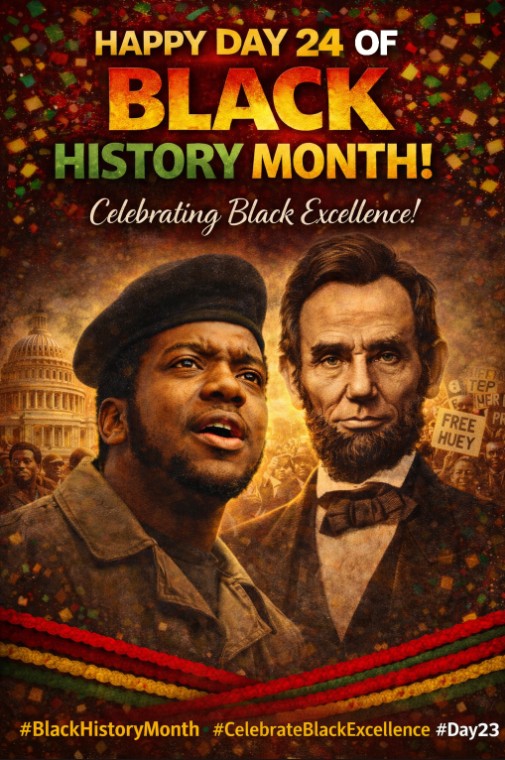
Happy Day 24 of Black History Month!
Fred Hampton and Abraham Lincoln are often remembered for different reasons, but we celebrate them for a similar core idea, they challenged powerful systems that treated some people as less human than others.
Fred Hampton is celebrated because he showed how change can be built from the ground up through community action and solidarity.
As a young leader in the Black Panther Party, Hampton focused on meeting people’s immediate needs,feeding children, providing health services and educating communities about their rights. He believed that freedom was not just about laws, but about whether people had food, safety and dignity in their daily lives.
Hampton also worked to unite people across racial and economic lines, arguing that poverty and injustice harmed many communities in similar ways. His ability to organize and inspire others made him a powerful voice for social change, even at a very young age.
At the age of 21, Fred Hampton was murdered because authorities saw him as a serious political threat, not because he committed crimes. Fred Hampton was targeted primarily due to his ability to organize, unite and inspire people. As a young leader of the Black Panther Party in Chicago, his Rainbow Coalition brought together Black, Latino and poor white communities, something that challenged the existing power structure by reducing division and increasing collective strength.
Government agencies viewed this kind of unity as dangerous. The Federal Bureau of Investigation ran a program called COINTELPRO, which aimed to disrupt and dismantle groups considered “subversive.”
Internal documents later showed that Hampton was seen as someone who could become a powerful national leader. He was targeted for surveillance, infiltration and neutralization because of his influence, not violence.
Local authorities were also involved. The Chicago Police Department carried out a pre-dawn raid on Hampton’s apartment in December 1969. Evidence later revealed that law enforcement relied on information from an informant and that the operation was deeply flawed and unjust.
Fred Hampton is remembered today not just for how he died, but for why he was targeted. He proved that organized communities, mutual aid and solidarity across differences could challenge systems of inequality. His death became a powerful symbol of how far authorities were willing to go to stop movements for social change.
Abraham Lincoln is celebrated because his leadership helped fundamentally change the legal and moral direction of the United States.
As president during the Civil War, Lincoln confronted the institution of slavery at a time when the nation was deeply divided and violent conflict seemed unavoidable. Through actions such as the Emancipation Proclamation and his support for the Thirteenth Amendment, he helped end slavery as a legal system.
Abraham Lincoln was murdered because of his role in ending slavery and reshaping the United States after the Civil War. The man who killed him, John Wilkes Booth, was a Confederate sympathizer who believed Lincoln was a tyrant for freeing enslaved people and granting rights to Black Americans. Booth thought killing Lincoln would help reverse the changes Lincoln had fought for.
Lincoln is remembered today because he was targeted for standing against an unjust system and using his power to change the law in ways that expanded freedom. His death showed how deeply divided the country was and how dangerous it can be to challenge entrenched injustice.
For Black History Month, the deaths of Fred Hampton and Abraham Lincoln are connected because both men were murdered for challenging systems that upheld racial injustice.
Together, their deaths remind us that progress toward racial justice has often been met with extreme resistance. Lincoln represents the fight to end slavery through law and government, while Hampton represents the fight to make freedom real in everyday life through community action.
Remembering both during Black History Month helps us understand that Black history is shaped not only by what was achieved, but also by the risks people faced and the lives that were taken when they stood up against injustice.
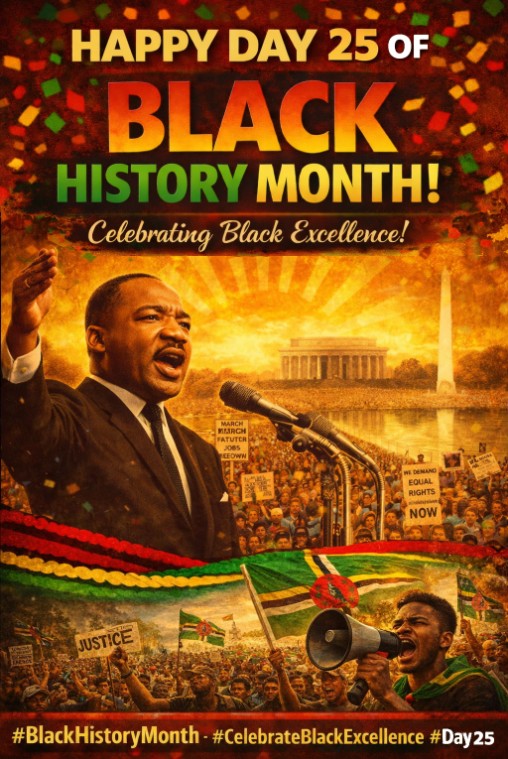
Happy Day 25 of Black History Month!
Black History is filled with moments when ordinary people became extraordinary by standing together for justice, equality and dignity. From the streets of Washington, D.C. in 1963, where Martin Luther King Jr. inspired hundreds of thousands with his dream of a fair and equal world, to the streets of Dominica today, where citizens gathered peacefully to make their voices heard, these moments remind us of one powerful truth – change is only possible when we have the courage to show up as one.
The March on Washington: On August 28, 1963, an estimated 300,000 people, a staggering number for its time, gathered in Washington, D.C. for the March on Washington for Jobs and Freedom. Led by Martin Luther King Jr., this historic demonstration brought together Black and white Americans, young and old, all united in a call for justice, equality and human dignity.
The march was largely peaceful, yet the sheer size of the crowd created tension. Organizers worked tirelessly to maintain order, fully aware that such a massive gathering could provoke fear or overreaction from authorities. Their courage, discipline and unwavering focus in the face of uncertainty demonstrated the power of collective action.
MLK’s legendary “I Have a Dream” speech that day became a global symbol of hope and justice. It reminded the world that civil rights were not a favor to be granted, but a moral imperative demanding action. Within a couple of short years, the march helped pave the way for the Civil Rights Act of 1964 and the Voting Rights Act of 1965, proving that peaceful, organized protest can change both laws and society.
The March 19, 2025 Electoral Reform Protest in Dominica, reflects the enduring spirit of our people standing together to be heard. Thousands gathered peacefully, raising their voices and demanding accountability.
Like many large gatherings, a small number of individuals engaged in unlawful actions and law enforcement responded with excessive force, which escalated tensions. Leadership decisions at the time also contributed to the situation becoming more charged, as their rhetoric and policies framed the protest as a threat, rather than our peoples right.
At the same time, no situation exists in isolation. Crowds, even when peaceful, can be provoked or baited into reacting. In this case, frustration, fear and provocation led some participants to respond in ways that intensified the confrontation. Responsibility, therefore, was shared among leadership, law enforcement and the crowd itself.
Ultimately, the events serve as a reminder of the power of collective action and the importance of measured leadership, thoughtful law enforcement and calm, deliberate protest.
These two moments, whether on the steps of the Lincoln Memorial or across Dominica teach us the same truth – our voices matter, our presence matters and our courage can move the world. Change is never easy and it often requires navigating tension, frustration and even conflict. But when we stand together with purpose, dignity and determination, we can shape a future where justice, equality and accountability are not just ideals, they are realities.
Let us honor those who stood before us by continuing to stand, speak and act for what is right, knowing that every voice contributes to the power of a people united.
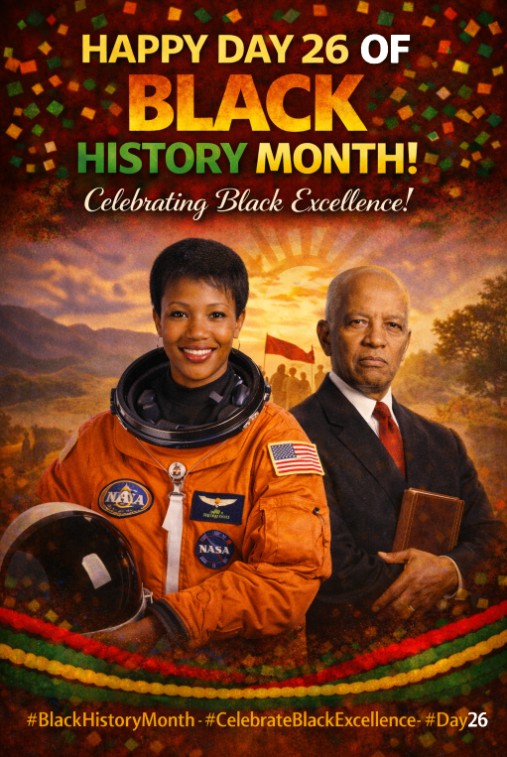
Happy Day 26 of Black History Month!
There are moments in history when courage reshapes the world, when one person dares to challenge limitation and another dares to challenge erasure. Today, we honor two giants whose vision, intellect and determination forever expanded what was possible for Black people everywhere – Mae Jemison and Carter G. Woodson.
Mae Jemison made history in 1992 as the first Black woman to travel into space aboard the Space Shuttle Endeavour. But her impact reaches far beyond orbit. A physician, engineer and advocate for STEM education, she has spent her life breaking barriers and opening doors for young people, especially young Black girls to see themselves in science, technology and exploration. She reminds us that our dreams are valid and our brilliance belongs everywhere, even among the stars.
Carter G. Woodson, known as the “Father of Black History,” understood that a people without knowledge of their history risk losing their power. In 1926, he founded “Negro History Week” – the foundation of what we now celebrate as Black History Month. His work ensured that Black achievements, scholarship and contributions would not be erased or ignored. Because of his vision, generations have grown up knowing that Black history is American history, Caribbean history and world history.
Though they lived in different eras and walked very different paths, Mae Jemison and Carter G. Woodson are deeply connected by one powerful truth, they both understood that representation changes reality. Woodson fought to ensure we would know our history, because a people who understand their worth cannot be easily denied their future. Jemison stepped into space carrying that very legacy, proof of what becomes possible when history fuels confidence and opportunity. One preserved the foundation; the other built upon it. Together, they remind us that when we honor our past and invest boldly in our future, there is no limit to what we can achieve.
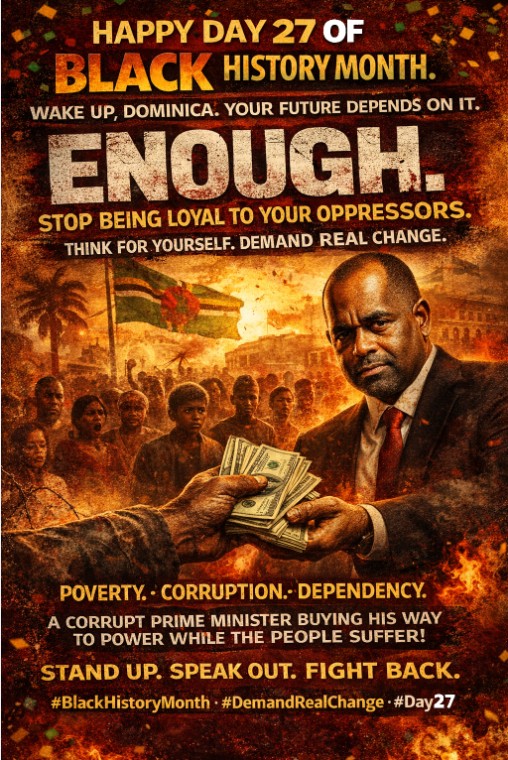
Day 27 of Black History Month!
Enough with the clapping and cheering for scraps. Enough with pretending everything is fine. Today, let us speak the truth. Dominica is trapped in a cycle of poverty, dependency and wasted potential, and there is an entire country helping keep it that way.
Look at the region. Other islands are shaking up their governments after decades, forcing real change, giving their people a chance to thrive. Meanwhile, here, Roosevelt Skerrit stays in power, election after election, while the opposition is weak, ignored, or too fractured to matter.
NO SHAME, Fontaine? No chance.
The Dominica Reform Party? People refuse to support it in any meaningful way.
And so Roosevelt Skerrit keeps winning, keeps holding the majority down, keeps them dependent on crumbs that will never come.
Why does this happen? Because you have allowed yourself to be weak-minded. You cheer for the Top 1%, hoping for handouts, blind to the fact that they only benefit from our compliance. You refuse to think for yourself, you normalize poverty and you accept suffering as your lot in life.
Black History is not just about the past, it is about seeing injustice, calling it out and refusing to let it continue. Today, it should remind you that your silence, blind loyalty and unwillingness to act are part of the problem.
If Dominicans want real change, they have to stop being spectators. You have to demand accountability, support leaders and movements that actually offer solutions and stop cheering for those who keep us small. Real progress does not trickle down, as they say – it has to be fought for.
So today, on the 27th day of Black History, let this be the lesson. You deserve more than scraps. You deserve dignity, opportunity and a country where thinking for ourselves is celebrated, not punished. Wake up, Dominica, your future depends on it
.