First, it is usually only people who have experienced functional, accountable governments abroad who truly recognize what is happening in Dominica. In most democracies, leaders do not remain in power indefinitely. Ten years is often considered a long tenure. Here, however, we are dealing with an entire generation, people 25 years old and younger, who have known nothing else. They were raised entirely under this government. Corruption, struggle and dependency are normal to them. They watched their parents live this way, so naturally, the cycle continues. The apple does not fall far from the tree.
At the same time, there is an older generation (75+) that believes loyalty to a political party is a virtue in itself. There is no logic, no policy based reasoning, no accountability, just blind loyalty. Loyalty for the sake of loyalty, even when it clearly works against their own interests.
Contrast this with a country like Canada (setting aside the United States, which is currently beyond comparison). Canadians are not loyal to parties in the same way. Prime Ministers change. Members of Parliament lose seats. Local ridings regularly change hands. Voters generally view politics through two lenses:
- What can this person do for me?
- What is their party’s big cause?
And often, the first question matters more than the second. That approach may seem selfish, but it works because the system does not punish people for changing their vote.
Another major issue here in Dominica is deliberate economic dependency. Roosevelt Skerrit has kept our country poor for a reason. Poor people are easier to control. When people are struggling, they need help. But because Dominica lacks strong, independent social assistance systems, people must seek help directly from government officials. That means loyalty becomes currency.
In North America and the U,.K., if you are struggling, there are systems for rent assistance, food support, healthcare, education, and social services. These systems function independently of political parties. You do not have to go to your local Member of Parliament and beg. It does not matter who is in power; help is available, and it cannot be denied based on political affiliation.
Here, it is very different. Take government housing as an example. People live rent free, but they do not own the homes. They have keys, not deeds. If someone is struggling to find work, and there are very few good paying jobs to begin with, what incentive is there to push harder when rent is not an issue? Human beings, by nature, will often take the easiest available path.
Now an election comes. Do you vote Roosevelt Skerrit out and risk losing your free rent home? Or do you vote for him again and keep living rent free? Given how deeply partisan politics are here, people genuinely fear retaliation if a new party comes to power. So the choice, for many, is simple, even if it is morally wrong or politically destructive.
This is why Roosevelt Skerrit maintains poverty and unemployment here in Dominica. People’s housing, livelihoods and survival become tied to his continued rule and deliberately failed economy. Dependency guarantees votes. And this is only the tip of the iceberg.
When you examine everything through this lens, you begin to see the pattern in how Roosevelt Skerrit governs. It is not accidental. Remember, he has a psychology degree, he understands how to manipulate human behaviour, and an English degree, he knows how to package and present that manipulation in a way people accept. That combination makes him especially dangerous. I refer to him as an Opportunistic Political Predator.
So how do you stop this? That is the million dollar question. Dominicans, culturally, are followers in politics. People do not vote based on policy or what is best for the country. They vote based on what their neighbours say, what their family believes, and what their social circle supports. With essentially only two parties, there is a strong chance that Labour dominates those conversations.
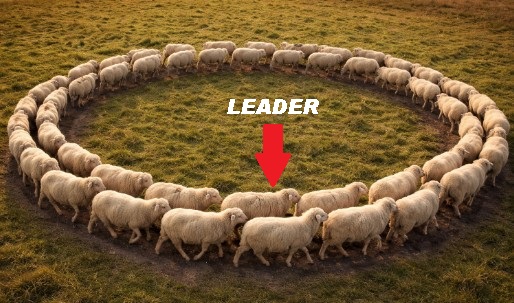
Politics here operates like a flock of sheep; everyone follows the one in front until they form a closed circle, endlessly moving but going nowhere. What is needed is one sheep willing to step outside that circle, make noise and lead others out.
The problem is fear. Fear of losing jobs. Fear of losing benefits. Fear of losing family and friends. Fear of violence. And these fears are not irrational. We are dealing with a Prime Minister who is alleged to have connections to drug cartels and close ties to leaders like Maduro, who is widely known as a narco-leader. When people say they are afraid to step forward, that fear is real.
Yet those same people expect me, a new, female, unsupported party leader, to step into the crosshairs, as if my leadership somehow carries less risk. I will not bribe voters. I will not offer gifts or handouts in exchange for support. So the country and I are effectively in a Mexican standoff. Either people decide to support my policies rather than an individual, or they remain trapped inthe same cycle and eventually watch opportunities pass them by, and as others leave and build lives abroad.